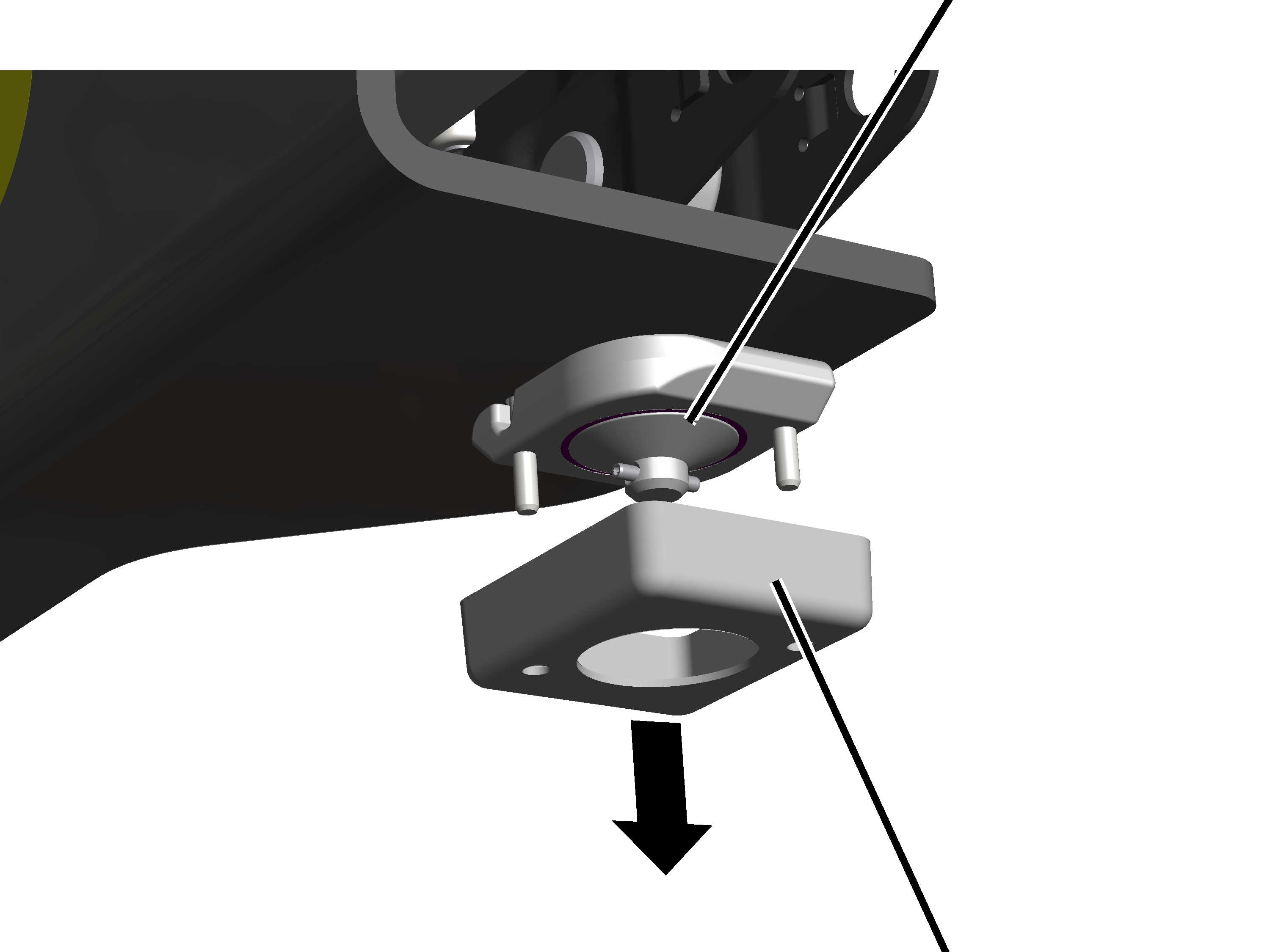
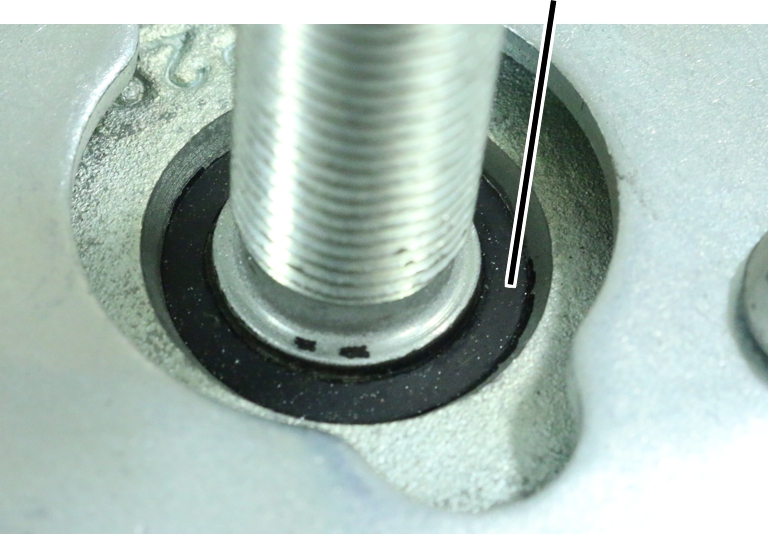
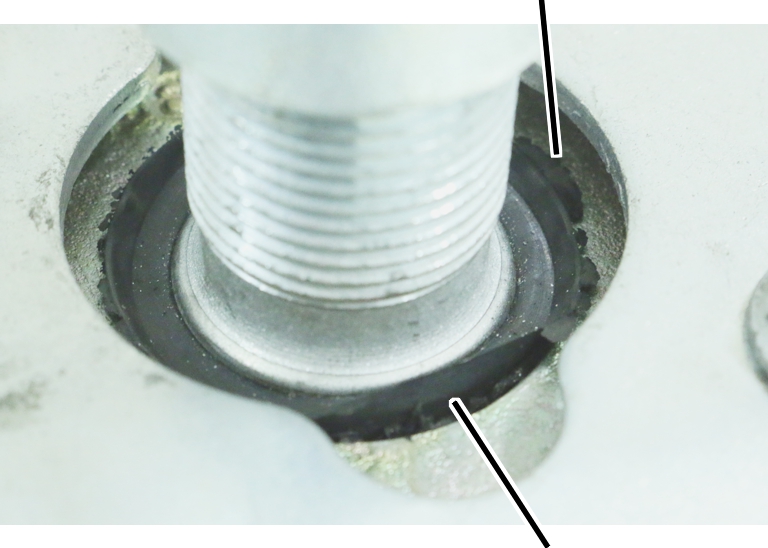
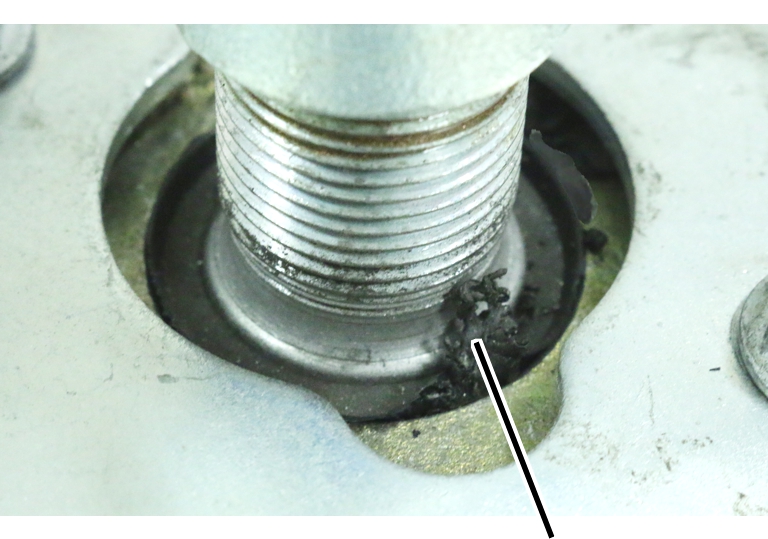
The figures show the inspection on a profile connection for M16 craneway suspensions. The inspection of a profile connection for M20 crane suspensions is the same.
The craneway suspensions and crane girder suspensions are wear-free parts.
Nevertheless, the rubber mountings must be checked at the regular inspection for material changes and deformations which may have occurred due to, for example, excessive or impermissible loads.
The condition of the rubber mountings is evaluated based on rolled-out rubber threads and rubber bulges and compared with the following images. The rubber mountings in the profile connections can be checked in the installed state.
|
|
The figures show the inspection on a profile connection for M16 craneway suspensions. The inspection of a profile connection for M20 crane suspensions is the same. |
|
|
Profile link |
|
| |
|
|
Cap |
 Screw the cap off.
● The profile link is visible and can be examined.
Inspect the profile link on the underside. See Checking the underside of
the profile connection.
The top side of the profile link does not need to be inspected.
On all ceiling-mounted brackets and crane girder suspensions:
 Check the condition of the rubber mounting in the profile connection
on the top side and compare it with the following images.
Check the condition of the rubber mounting in the profile connection
on the top side and compare it with the following images.
Example showing an "as new" profile connection:
|
|
"As new" rubber mounting |
|
| |
|
|
|
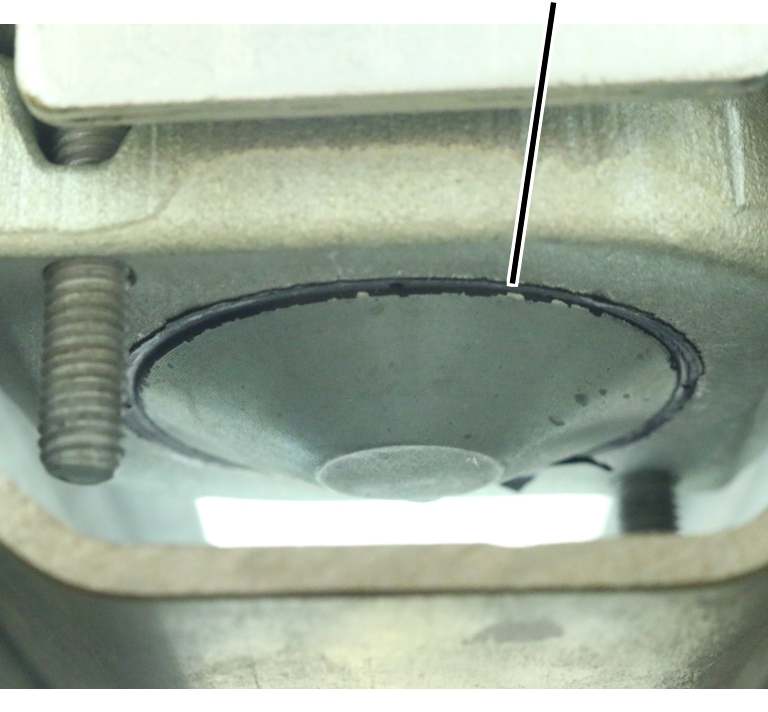
This rubber mounting is like new.
● No rolled-out rubber threads are visible.
● There may be a thin ridge or a thin film visible on the edge of the rubber mounting.
Example of a profile connection with still acceptable rolled-out rubber bulges:
|
|
Rolled-out rubber bulges |
|
| |
|
|
Rolled-out rubber bulges |
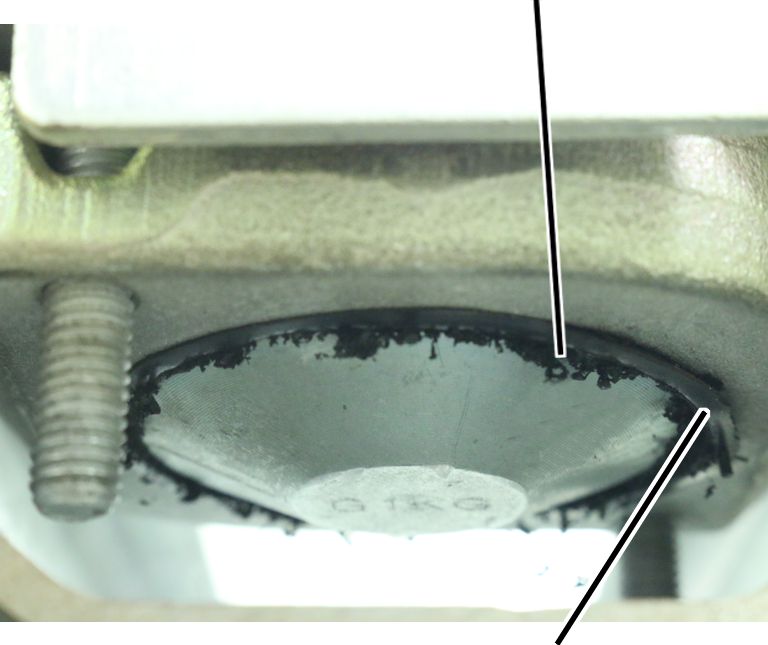
This rubber mounting has rolled-out rubber bulges within an acceptable range and does not require replacement.
● The filling of the rubber mounting flattens out upwardly out of the profile connection.
● Rolled-out rubber threads or small rubber bulges are visible.
Example of a profile connection with too heavily rolled-out rubber threads, which must must be replaced:
|
|
|
|
| |
|
|
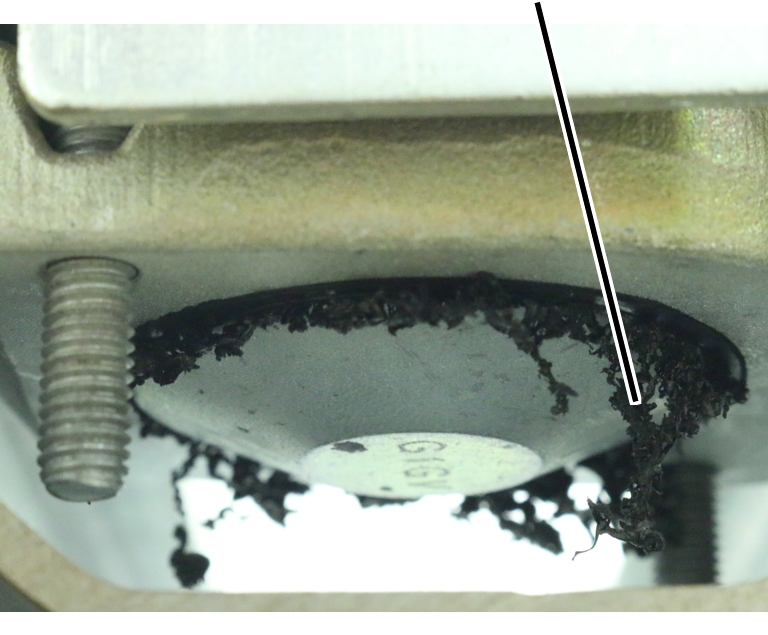
Clearly visible, long, rolled-out rubber threads |
This rubber mounting has clearly rolled-out rubber threads must be replaced.
● An increasing number of ever longer rubber threads roll out upwardly from the profile connection.
● The rubber threads can emerge on one side or all around the circumference of the rubber mounting.
If initial rolled out rubber threads are visible on the top side:
The movements within the rubber mounting are equally strong on the top side and underside. If initial rolled out rubber threads are visible on the top side, the underside of the rubber mounting must also be checked.
Options for performing the examination:
─ Feel along the underside of the profile connection for rubber bulges or rolled-out rubber threads.
─ Examine the underside of the profile connection with a mirror or camera.
─ Unscrew the retaining cap, release the tension nut and remove the profile connection.
Check the condition of the rubber mounting in the profile connection
on the underside and compare it with the following images.
Example showing an "as new" profile connection:
|
|
"As new" rubber mounting |
|
| |
|
|
|
This rubber mounting is like new.
Example of a profile connection with still acceptable rolled-out rubber threads:
|
|
Rolled-out rubber threads |
|
| |
|
|
Rolled-out rubber bulges |
This rubber mounting has rolled-out rubber threads within an acceptable range and does not require replacement.
Example of a profile connection with too heavily rolled-out rubber threads, which must must be replaced:
|
|
Clearly visible, long, rolled-out rubber threads |
|
| |
|
|
|
This rubber mounting has clearly rolled-out rubber threads must be replaced.
If the condition of the top side or underside is similar to the condition depicted with too heavily rolled-out rubber threads or rubber bulges:
Remove the profile connection and replace it with a new one.
Likewise remove the ceiling-mounted bracket and install a new
one.
Profile connection and ceiling-mounted bracket must always be replaced in pairs.
The bearing shell in the ceiling-mounted bracket and in the profile connection must always have the same colouring (silver or yellowish). Ceiling-mounted brackets and profile connections with differently coloured bearing shells must not be installed together.