Comply with occupational health
and safety requirements.
Comply with occupational health
and safety requirements.
If the wheel is damaged or worn, it must be replaced with a new wheel.
Comply with occupational health
and safety requirements.
Relieve the load of the end
carriage on the wire rope hoist near the wheel from below.
|
Connector housing | ||
|
| ||
|
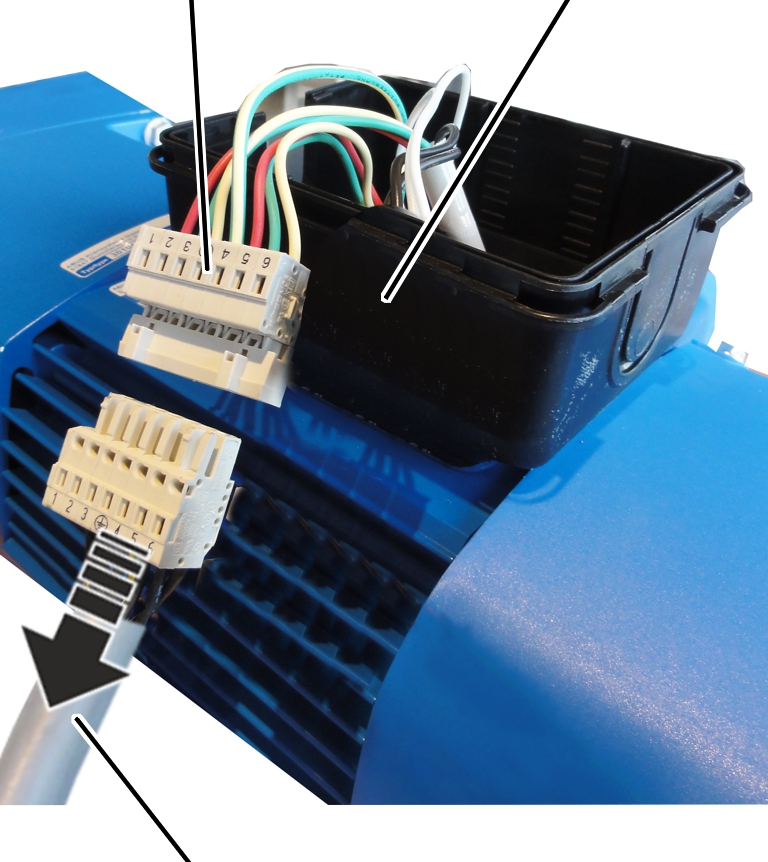
Connection cable |
| |
Open the connector housing to
the drive.
Disconnect the connection cable
from the coupler plug.
Determine the weight of the
drive. See the ABUS Drive product manual.
Secure the drive so that the
weight can be held safely and the output shaft will not be subject to load (e.g.
insert in round sling).
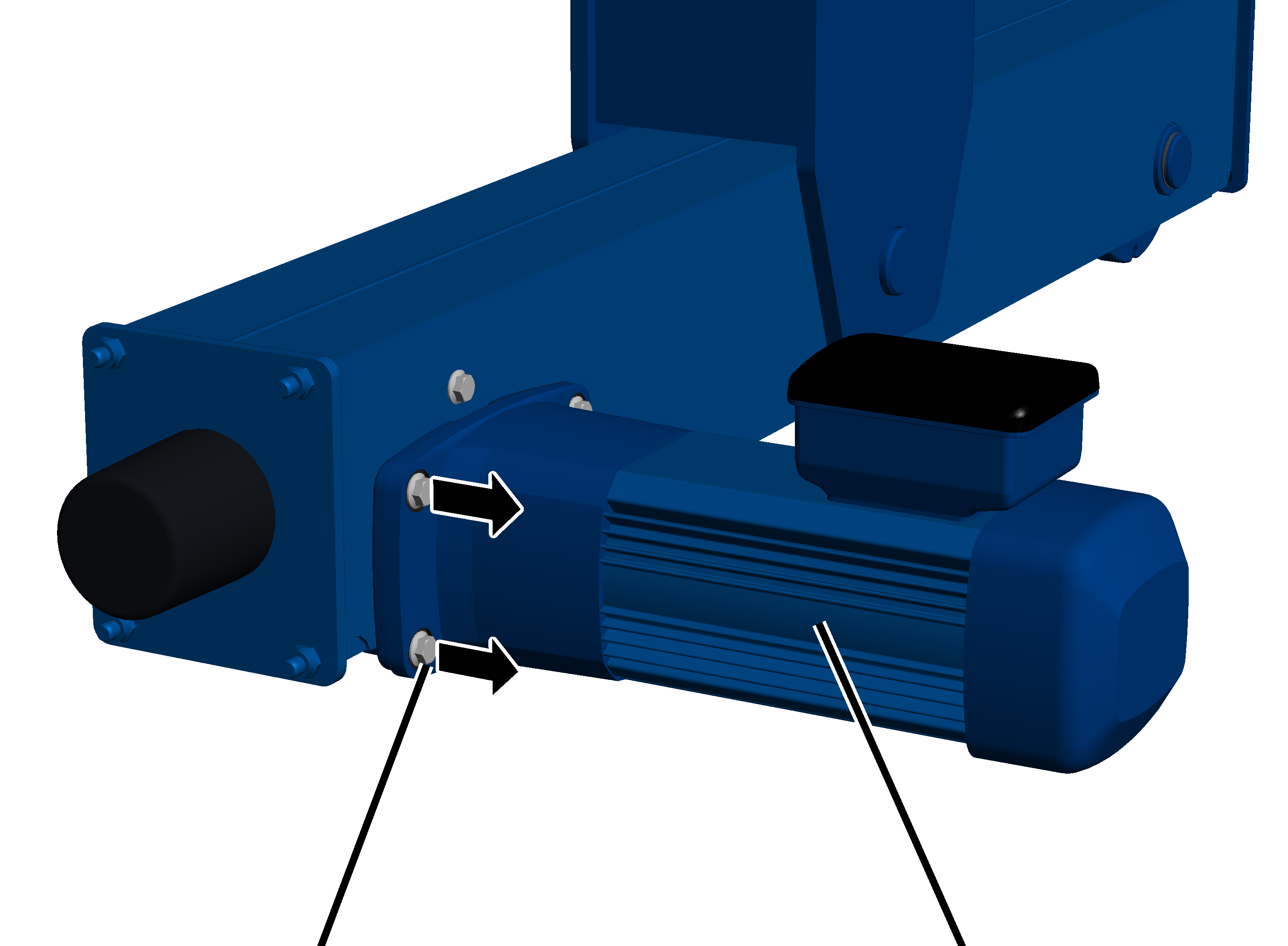
This section only applies if an AZP drive is to be removed.
|
| |
|
Rib screws |
Drive |
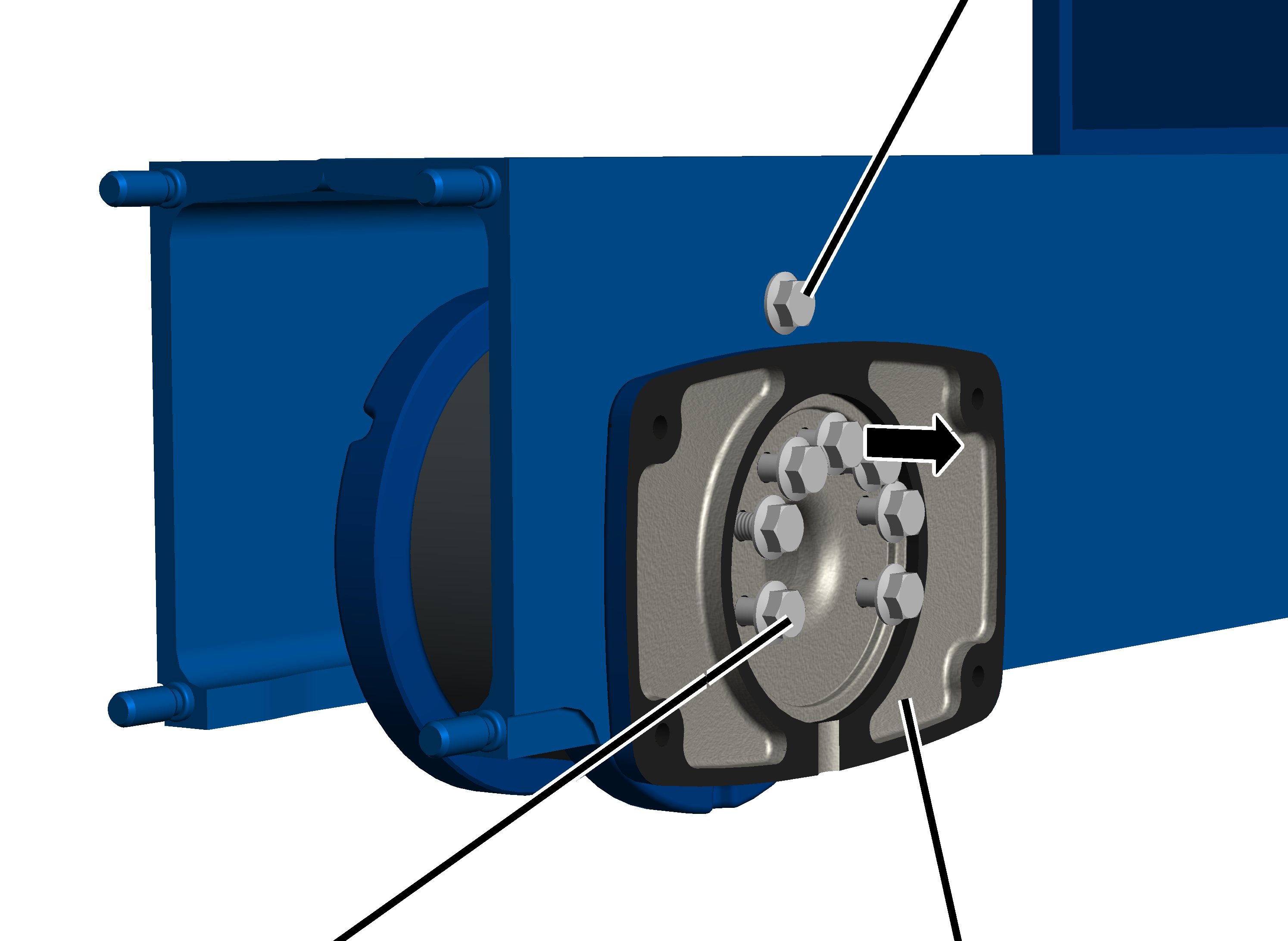
Release the rib screws (4x).
|
| |
|
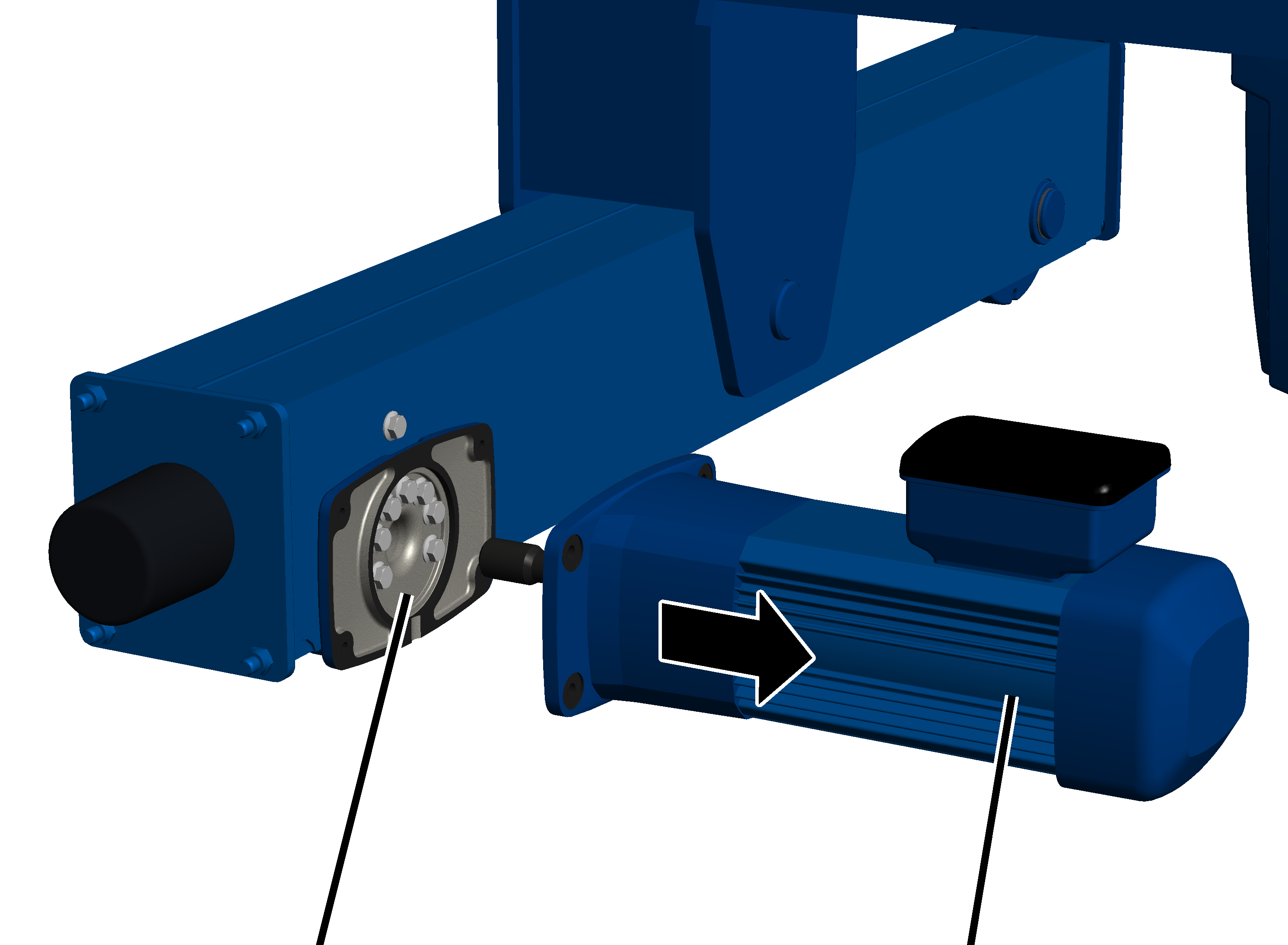
Bearing flange |
Drive |
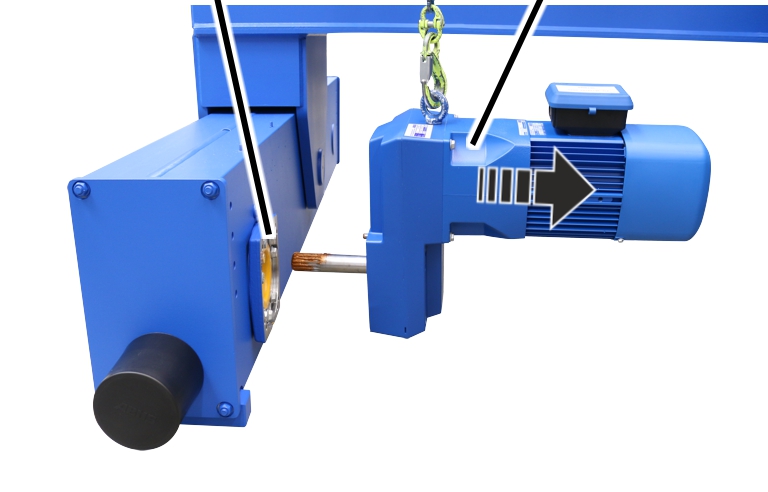
Pull out the drive.
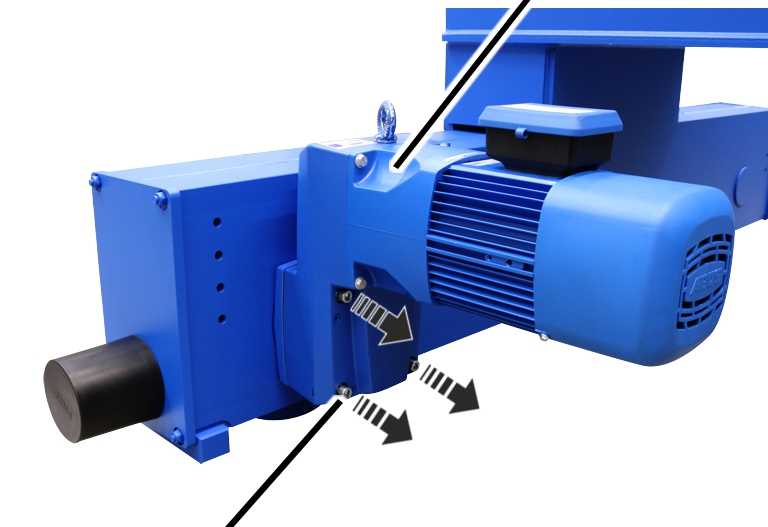
This section only applies if an AZF drive is to be removed.
|
|
Drive |
|
| |
|
Fillister-head screws |
|
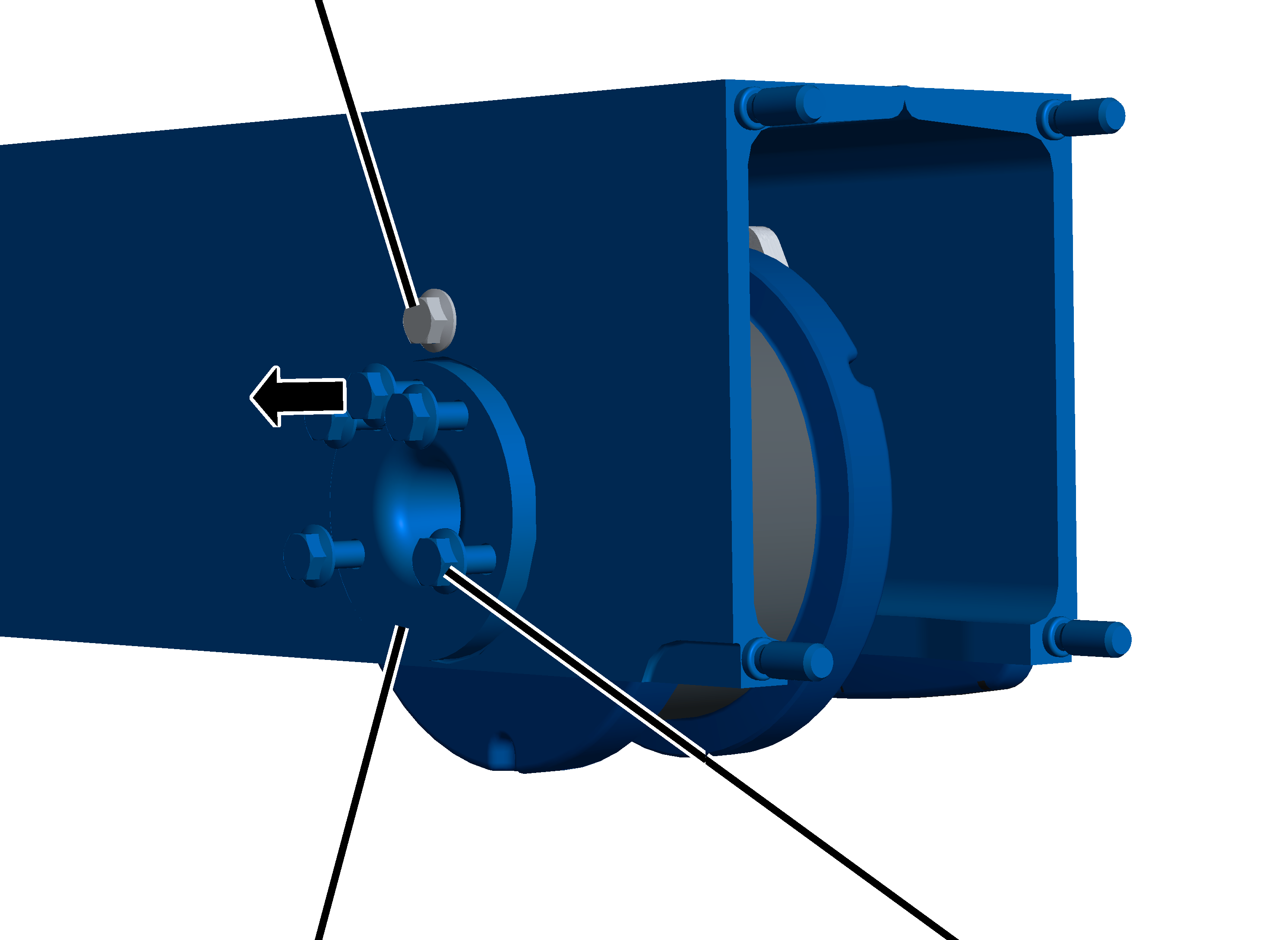
Loosen the fillister-head screws
(4x).
|
Bearing flange |
Drive |
|
| |
Pull out the drive.
|
|
Buffer plate |
|
| |
|
Self-locking nut |
Plastic washer |
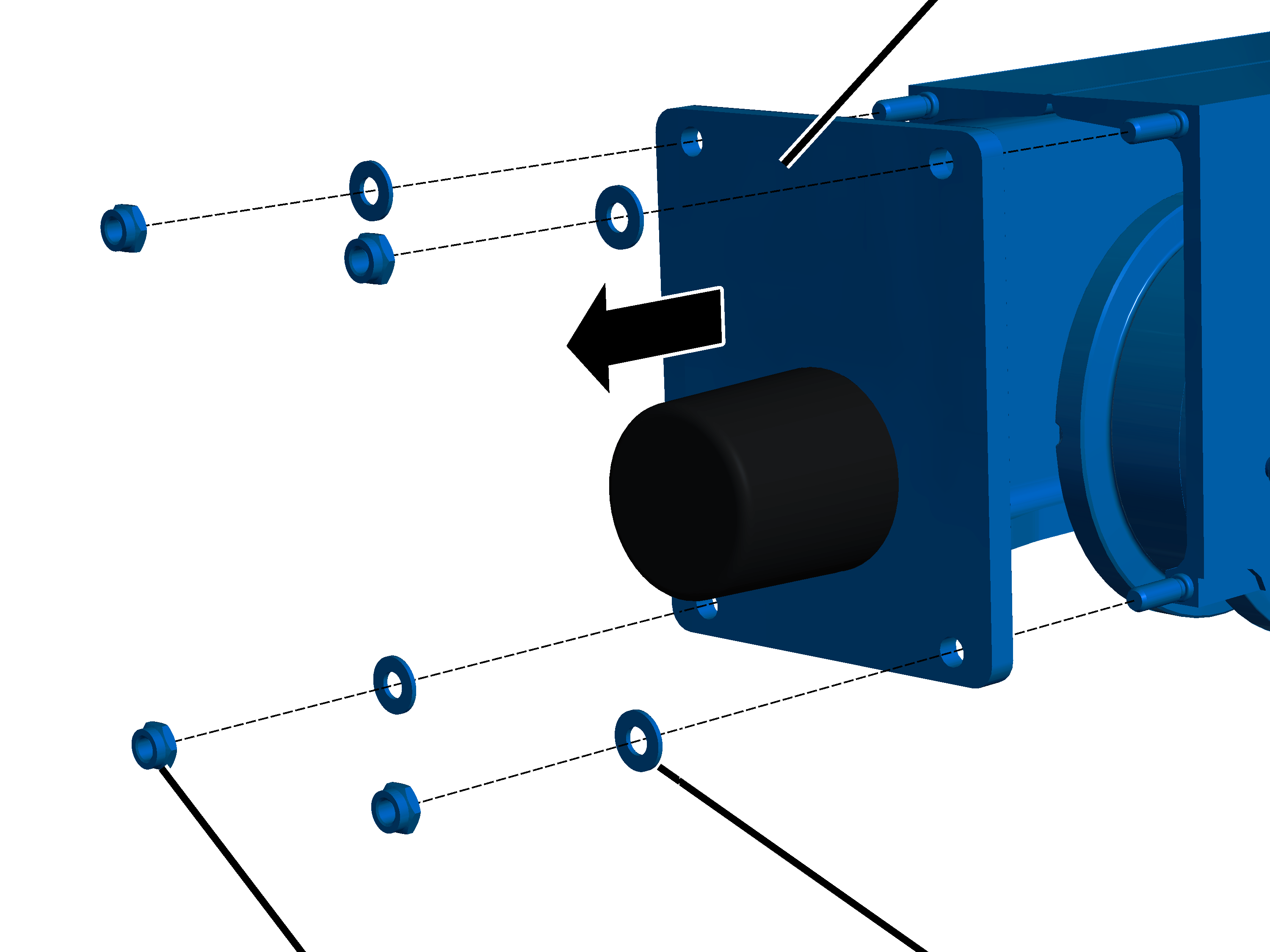
 Unscrew the self-locking nuts
(4x).
Unscrew the self-locking nuts
(4x).
Remove the plastic washers
(4x).
Remove the buffer plate.
|
Buffer plate |
Mounting plate |
|
| |
|
Rib screw M16x60 |
Safety buffer |
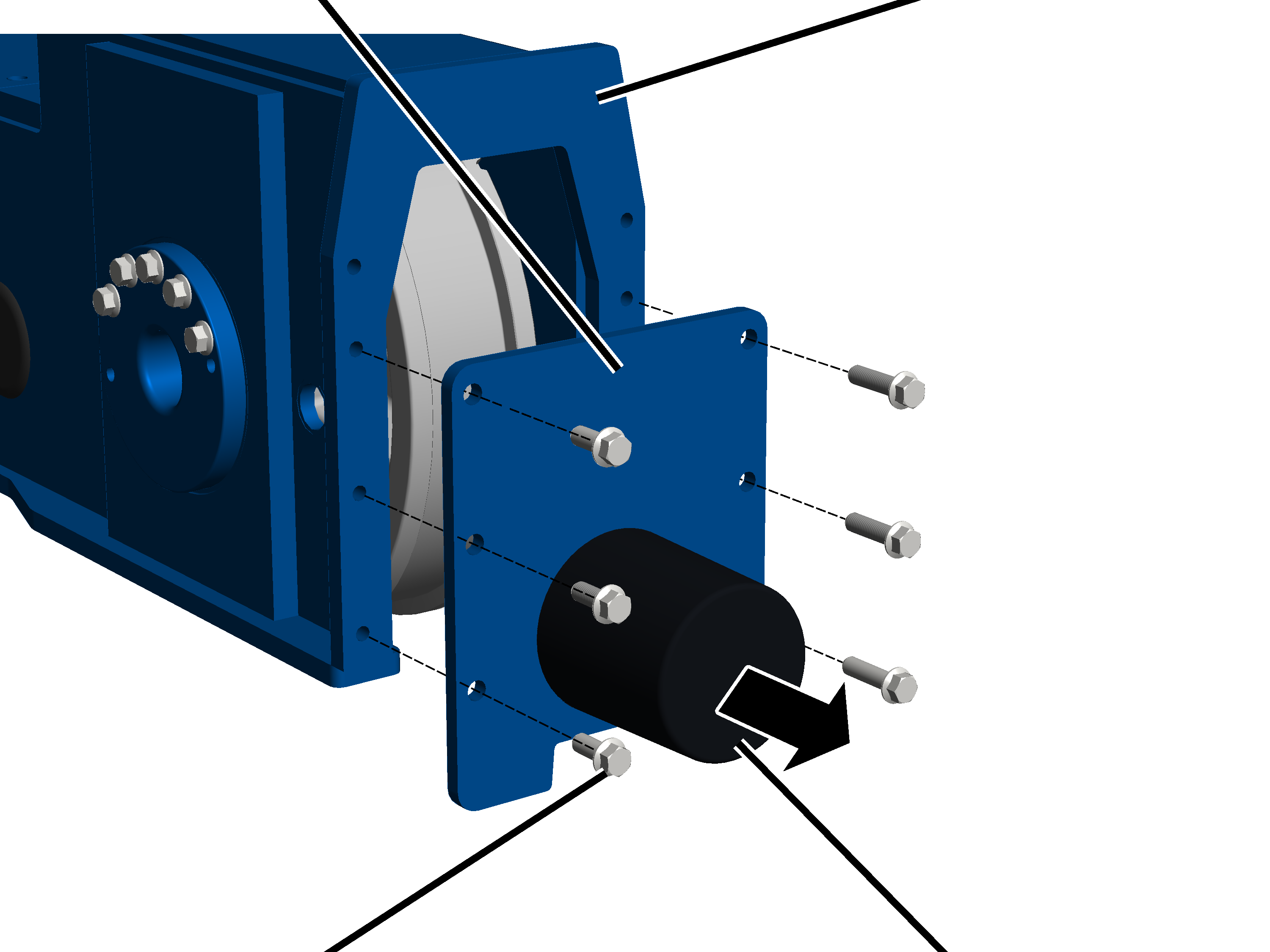
Unscrew rib screws M16x60 (6x)
and remove the buffer plate from the mounting plate.
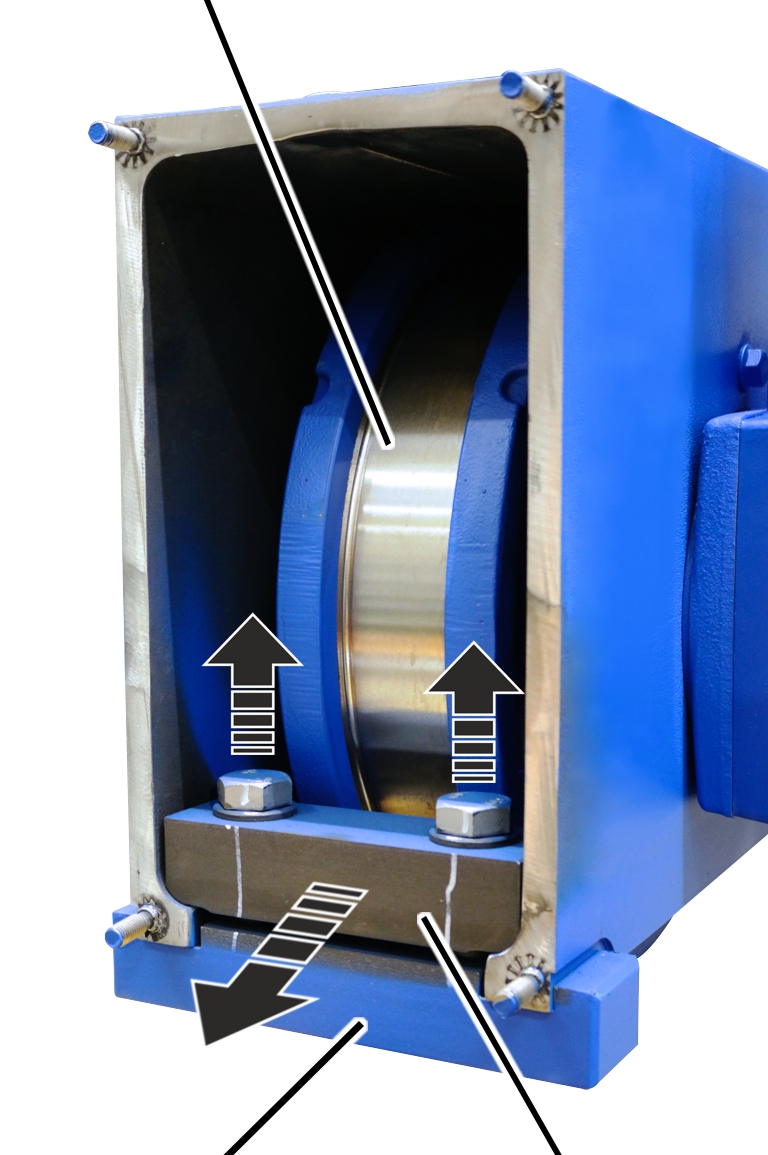
Trolleys in size 280, 350 and 420 have a clamping piece installed on the driven wheel in the end carriage. To remove the wheel, the clamping piece must be removed.
|
Wheel |
|
|
| |
|
Clamping piece |
Bracket |
Loosen screws (2x).
Take out the bracket with the
clamping piece.
|
|
Retaining screw |
|
| |
|
Rib screw |
Bearing flange |
|
Retaining screw |
|
|
| |
|
Bearing bolt |
Rib screw |
|
|
Wheel |
|
| |
|
Bearing bolt |
Bearing flange |
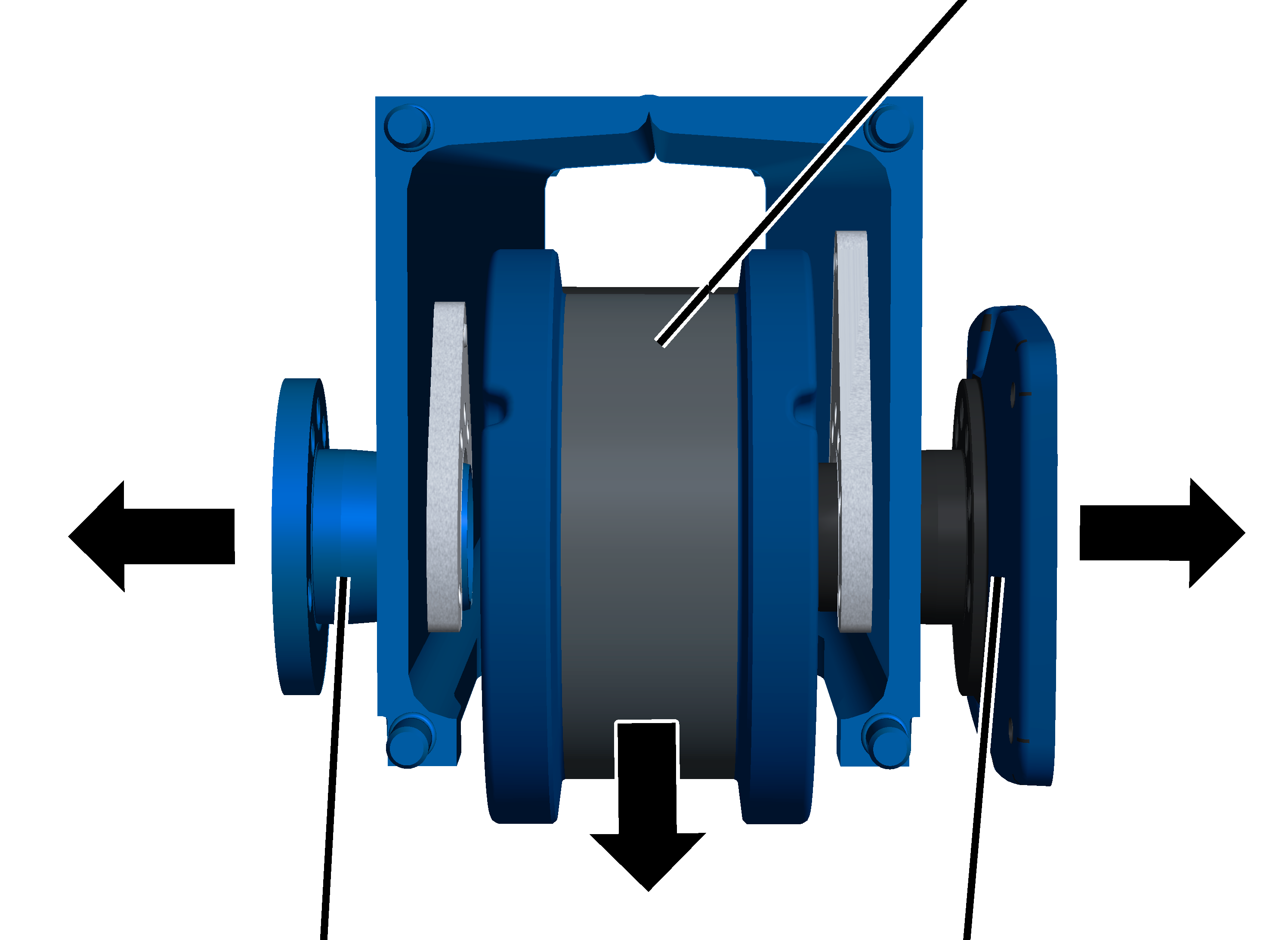
Take out the bearing bolt,
bearing flange and wheel.
Note
Only for size 420 with drive 420V: an adapter is also inserted on the bearing flange. If this cannot be easily taken off, it can remain on the bearing flange when the wheel is removed.
Tip:
To be able to easily remove the bearing flange from the end carriage, screw two or four screws in the corners of the bearing flange, using them to press the bearing flange off the end carriage.