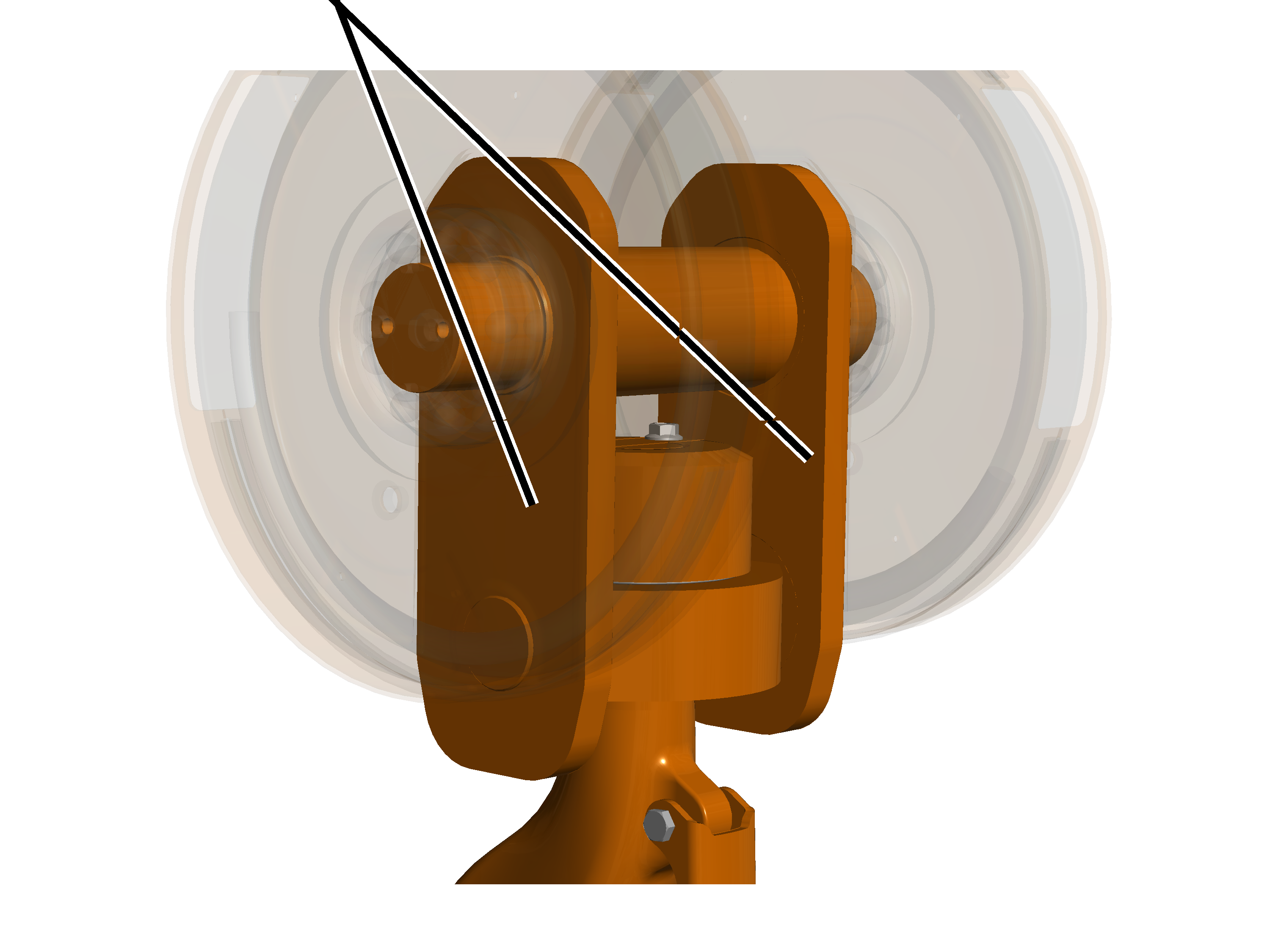
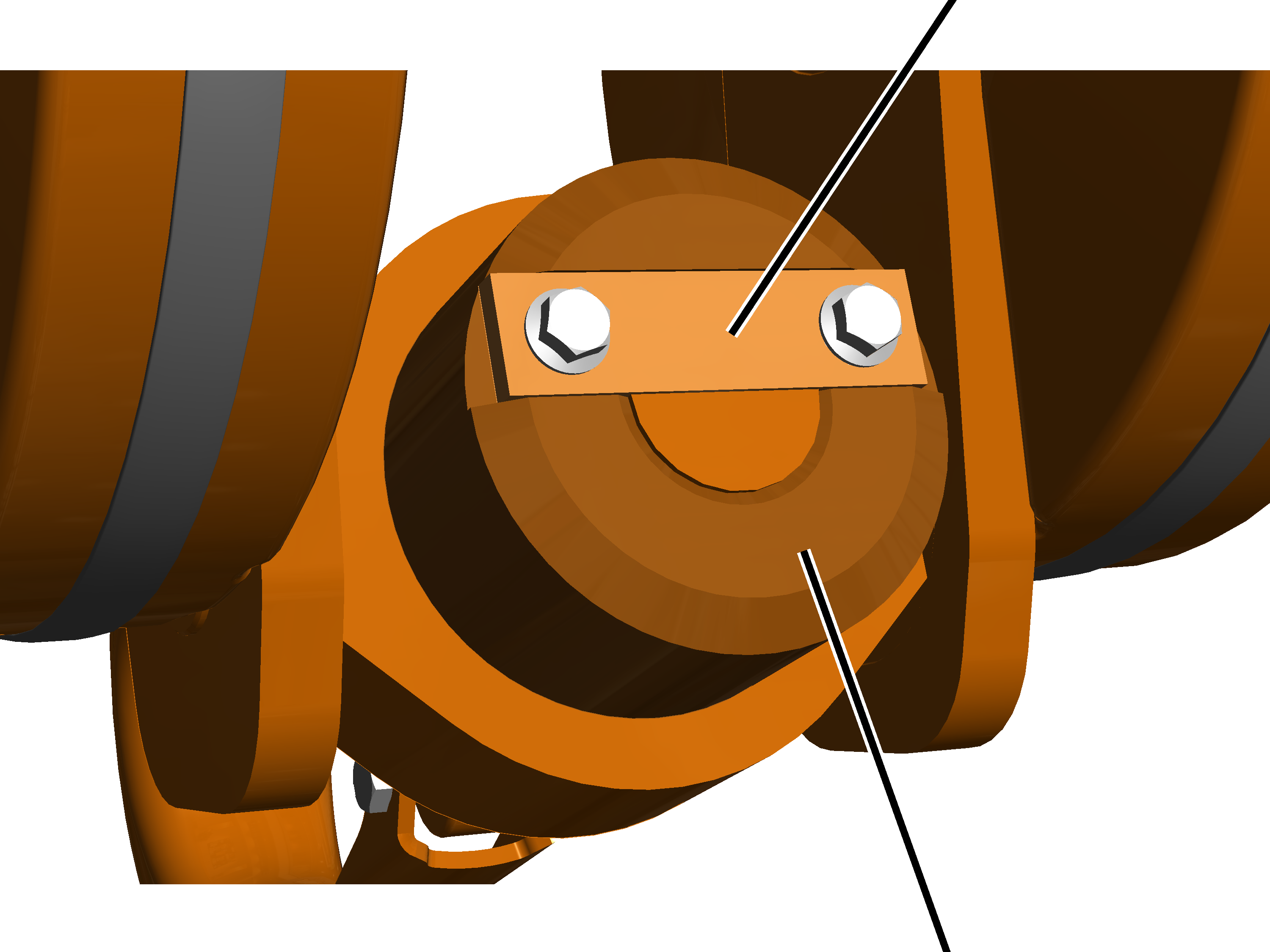
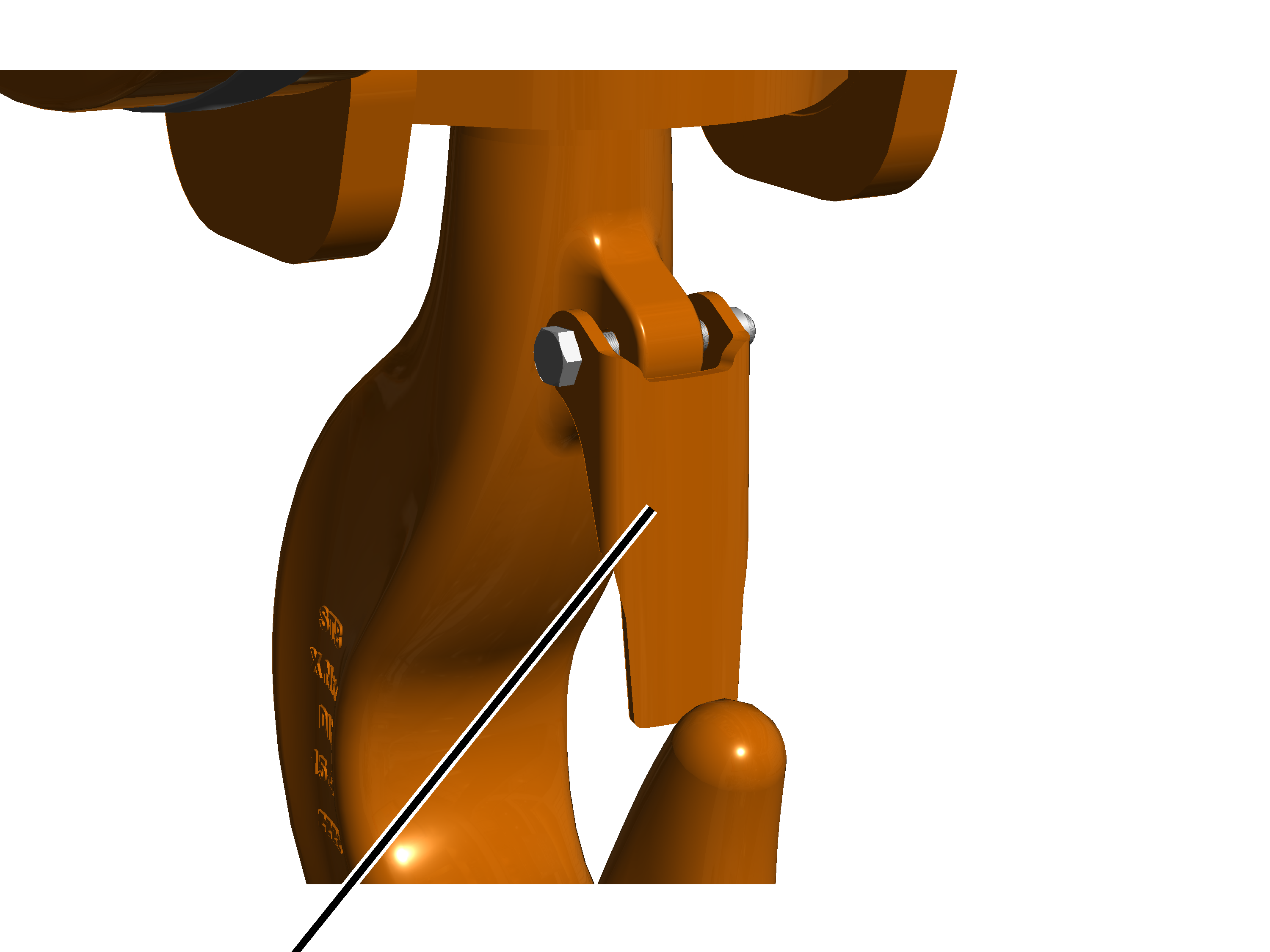
Load hook crosshead
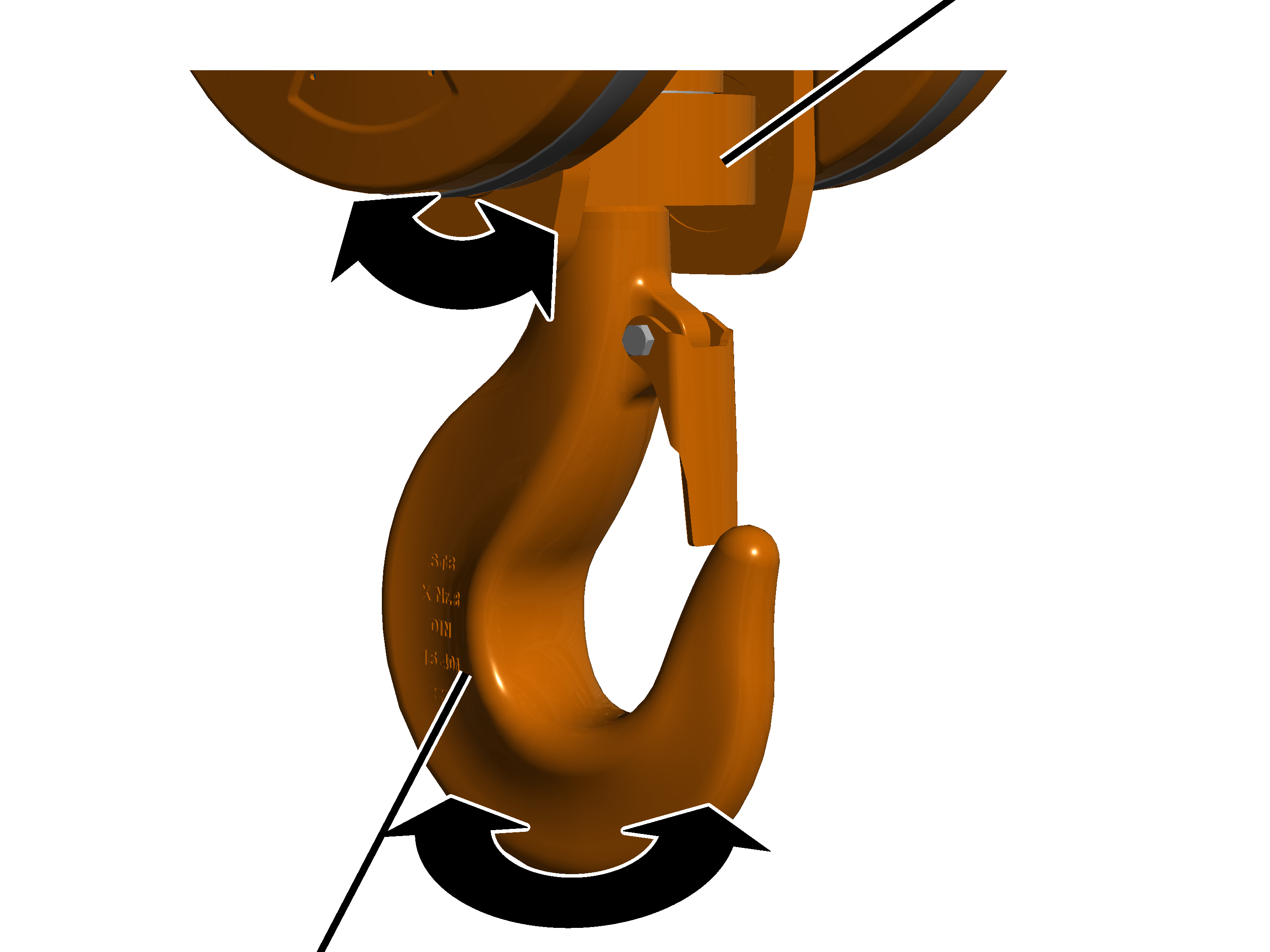
Load hook
|
|
Load hook crosshead |
|
| |
|
Load hook |
|
 Rotate the load hook to the left and right.
The load hook must be easy to move and freely rotatable.
Slew the load hook backwards and forwards at the load hook crosshead.
The load hook crosshead must be freely slewable.
 If the load hook is not easy to move or freely rotatable or slewable,
it must be repaired.
If the load hook is not easy to move or freely rotatable or slewable,
it must be repaired.
|
Bracket |
|
|
| |
Inspect the brackets. They must not exhibit any cracking, deformation
or other signs of damage.
If the brackets are deformed or damaged in any other way, they must
be replaced.
|
|
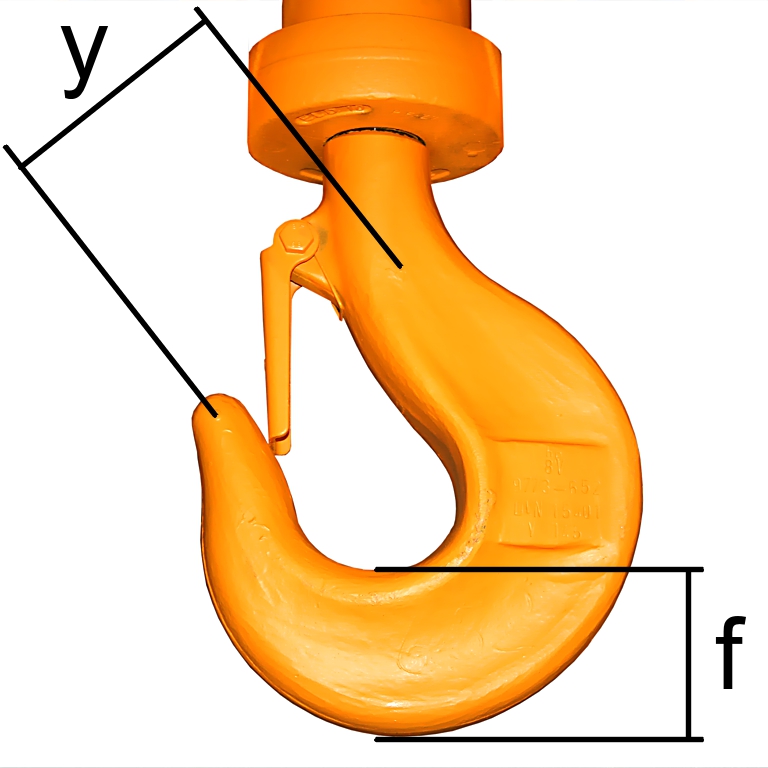
Measure the distance ‘y’ between the two stamped markings on the load
hook.
Read the reference distance for ‘y’ from the test log book or, if
applicable, from the load hook itself.
The measured distance ‘y’ must not be greater than 1.1 times the reference distance ‘y’.
With ramshorn hooks, the distances ‘y1’ and ‘y2’ from the respective engraved marking on the tip of the load hook to the marking on the hook shank must each be measured and compared separately.
Measure the base height ‘f’ of the load hook.
Compare the measured value with the table.
The measured base height ‘f’ must not be smaller than given in the table. The table specifies the minimum base height.
|
Size of load hook |
Type of load hook |
Minimum base height, ‘f’ [mm] |
|
6 |
Ramshorn hook |
71.3 |
|
6 |
Normal hook |
80.8 |
|
8 |
Ramshorn hook |
80.8 |
|
8 |
Normal hook |
90.3 |
|
10 |
Ramshorn hook |
90.3 |
|
10 |
Normal hook |
100.7 |
|
12 |
Ramshorn hook |
100.7 |
|
12 |
Normal hook |
112.1 |
|
16 |
Ramshorn hook |
112.1 |
|
16 |
Normal hook |
125.4 |
|
20 |
Ramshorn hook |
125.4 |
|
20 |
Normal hook |
142.5 |
|
25 |
Ramshorn hook |
142.5 |
|
25 |
Normal hook |
161.5 |
|
32 |
Ramshorn hook |
161.5 |
|
32 |
Normal hook |
180.5 |
|
40 |
Ramshorn hook |
180.5 |
|
40 |
Normal hook |
201.4 |
If the load hook has been widened to a greater degree than is allowed
or if the base height is below the permissible limit, replace the load hook.
Do not carry out any repair welding (e.g. build-up welding) on the load hook or on the load hook nut.
|
| |
|
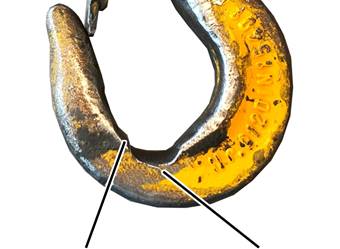
Edge at transition to adjacent area in hook bed |
Protruding burr |
Check the wear surfaces in the hook bed. They must merge gradually
with the surrounding surfaces. They must not have any sharp score marks and
edges or other surface faults.
Inspect the edges. The side edges on the hook should not have any
exterior protruding burrs or similar surface faults.
If the wear surfaces or side edges do have sharp score marks or
edges, these may be smoothed (e.g. filed). The limit values for base height
given above must be observed even after smoothing.
Inspect the load hook surface. It must not have any faults, cracks or
corrosion.
If the surface of the load hook is to any extent not OK, disassemble
the load hook and inspect the surface of the hook shank. It must not have any
faults, cracks or corrosion.
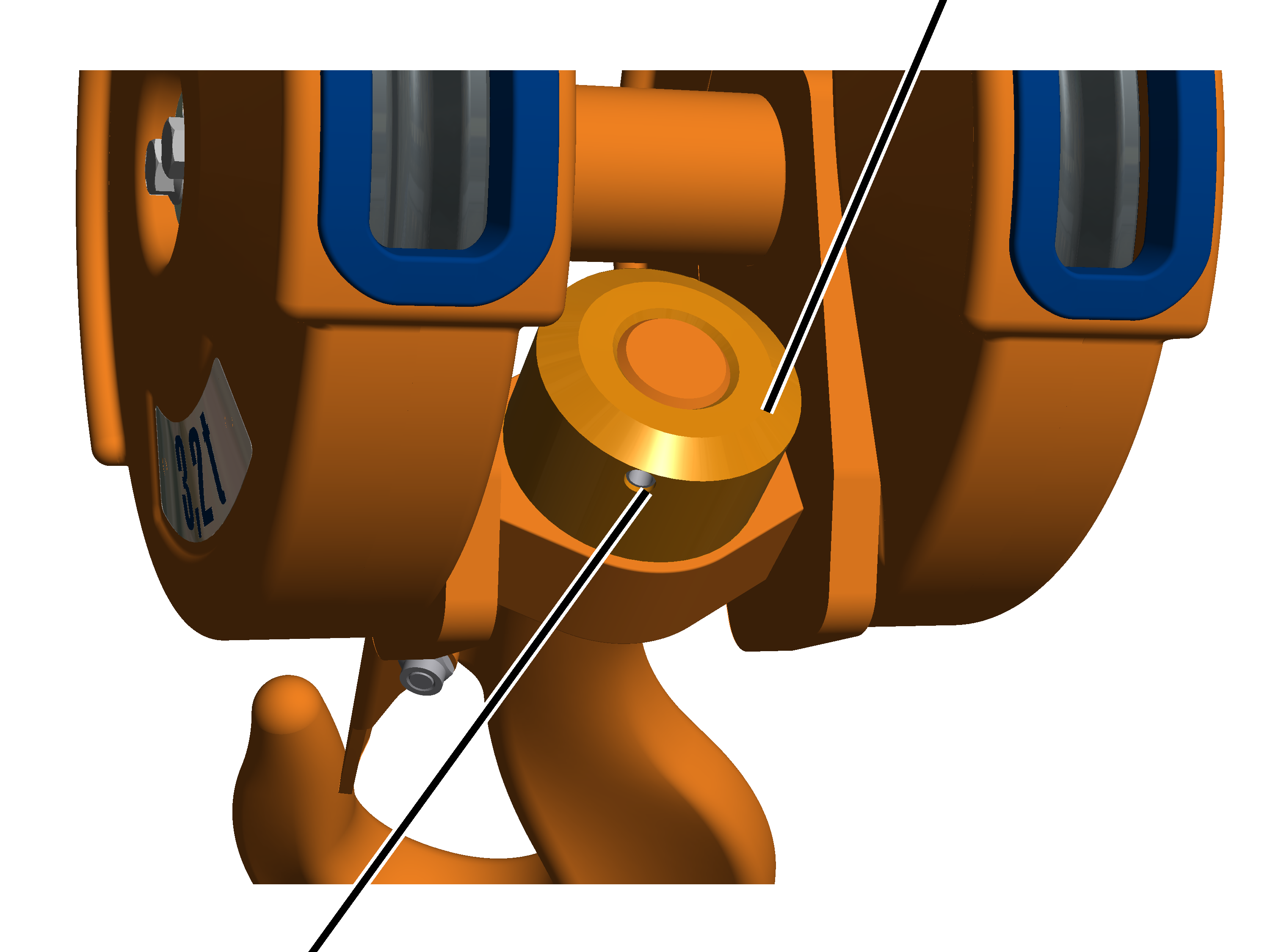
For load hooks with anti-rotation device in the form of a slotted spring pin:
|
|
Load hook nut |
|
| |
|
Slotted spring pin |
|
Tilt the load hook until the anti-rotation device is clearly
visible.
Inspect the anti-rotation device. The locking pin must be present,
undamaged and sitting securely.
If the locking pin is missing or damaged, it must be replaced.
For load hooks with anti-rotation device in the form of a locking plate:
|
|
Locking plate |
|
| |
|
|
Load hook nut |
Tilt the load hook until the anti-rotation device is clearly
visible.
Inspect the anti-rotation device. The locking plate must be present,
undamaged and sitting securely.
If the locking plate is missing or damaged, it must be replaced.
|
| |
|
Hook safety latch |
|
Inspect the hook safety latch. It must be present, functional and
easy to move, and must not be deformed or damaged in any other way.
If the hook safety latch is missing, damaged or not working properly,
it must be replaced.