The HBF drive consists of a travel
motor with friction wheel, which runs underneath the HB profile rail, and an HBF
trolley, which runs in the HB profile rail and is connected with the HBF drive.
The unit comprised of HBF drive and HBF trolley is connected by means of a
coupling bar to the HB crane or to the trolley.
|

|
The figures show the installation of a steel HB
profile rail of size HB150S. The installation of larger or smaller HB
profile rails or aluminium HB profile rails does not differ significantly
from this. |
|

|
Where an HBF drive is to be installed is specified
in the planning documents. |
|
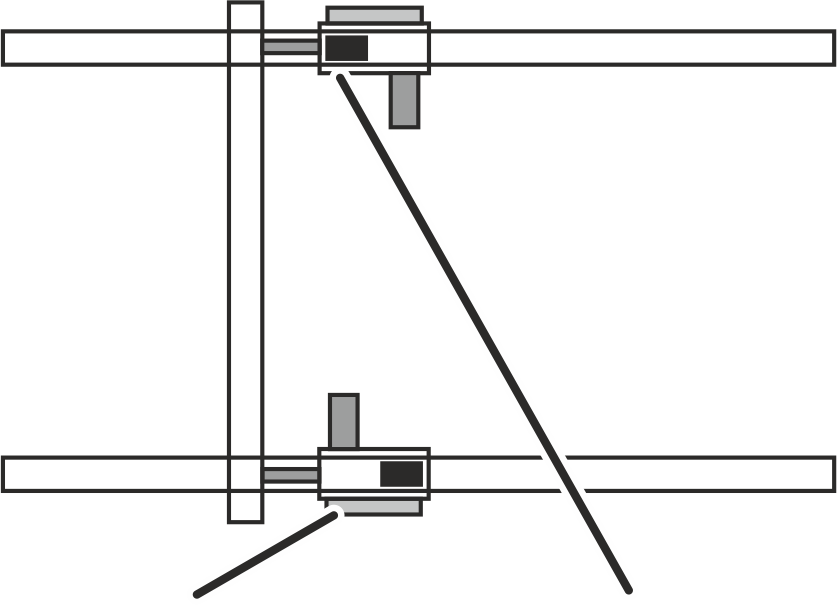
|
|
HBF
drive connected to the HB crane on the travel motor side |
HBF
drive connected to the HB crane on the friction wheel
side |
The HBF drives are installed in such a way that the travel
motor is always facing inwards so that the motor does not project on the
outside. For this reason, one of the HBF drives is connected to the crane or
trolley on the friction wheel side and the other HBF drive is connected to the
crane or trolley on the travel motor side.
Only for connection of the
HBF drive on the friction wheel side
This section only applies if the HBF drive is to be connected
to the crane or trolley on the friction wheel side.
Pre-assembling
the HBF drive
On every HBF drive:
|
|
The pictures illustrate the installation of a normal
coupling rod. Installation of a coupling rod for travelling around bends
does not differ significantly from this. |
|
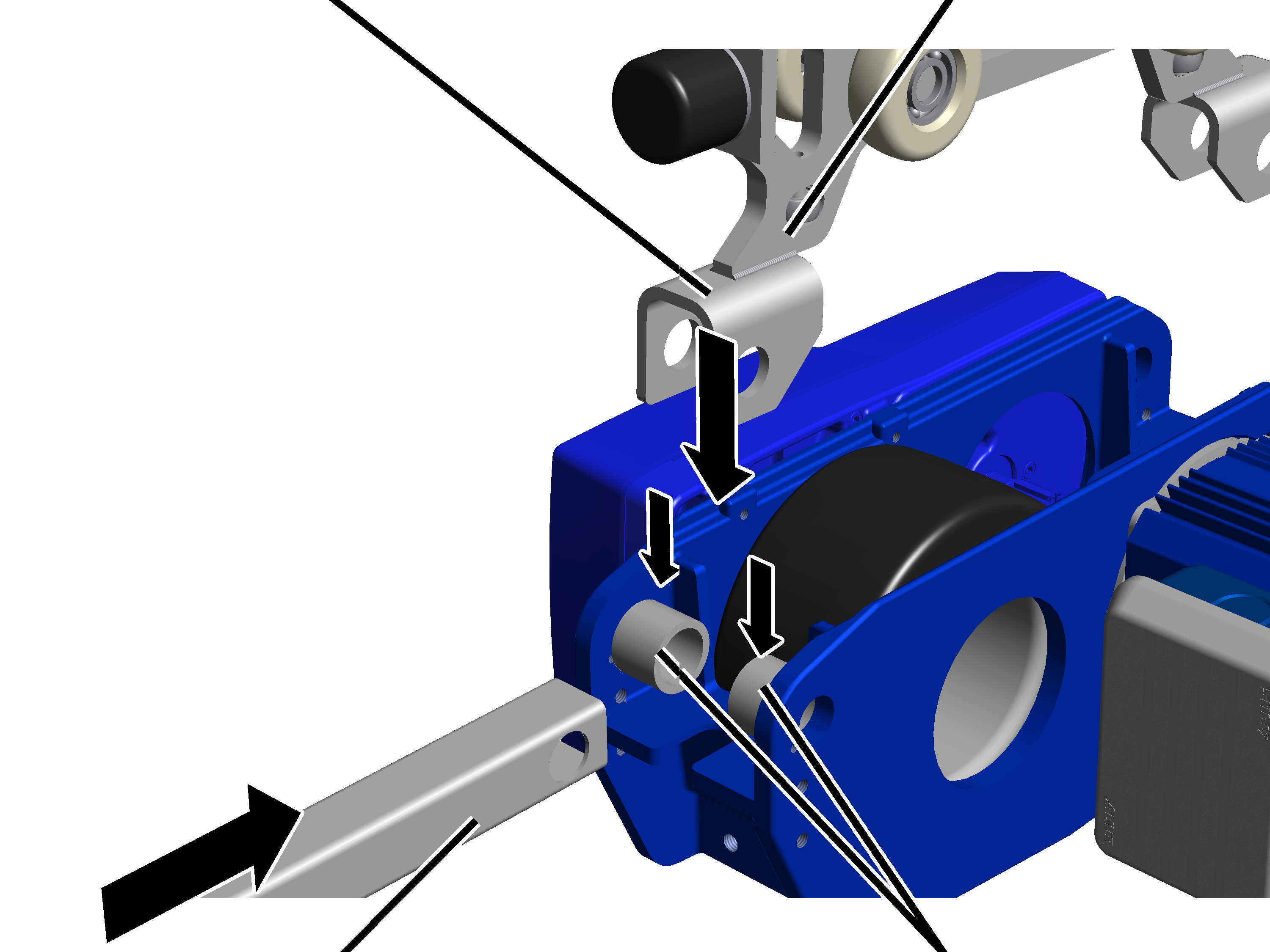
Fork
part |
HBF
trolley |
|
|
|
Coupling
bar |
Bush
(2x) |
 Move the bushes (2x) left and right and
the fork part to the centre between the HBF drive on the friction wheel
side.
Move the bushes (2x) left and right and
the fork part to the centre between the HBF drive on the friction wheel
side.
Push the coupling bar between the fork part from the front.
|
|
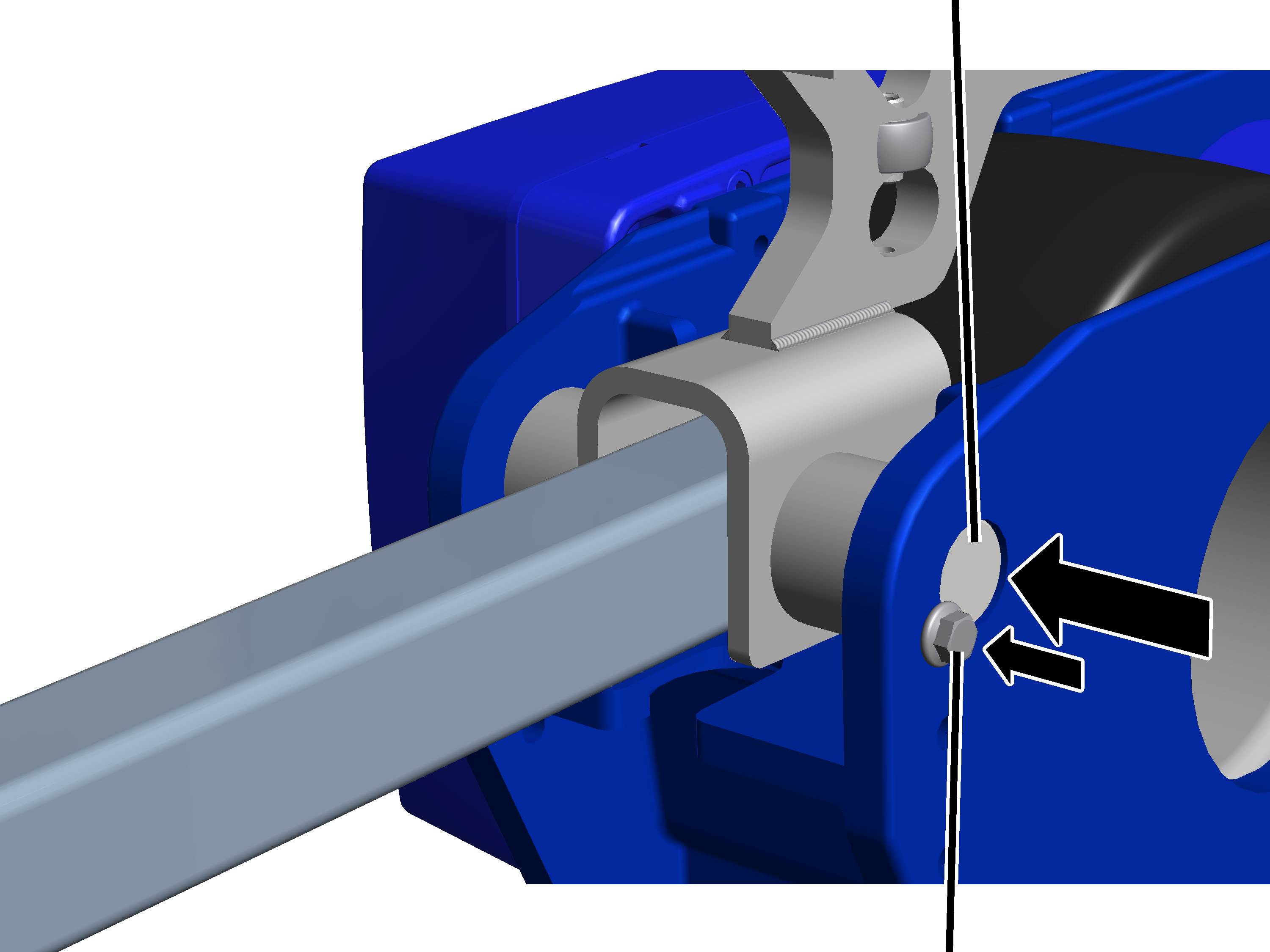
Bolt |
|
|
|
|
Rib
screw M5x10 |
 Push the bolt laterally through the
HBF drive, the bushes, the fork part and the coupling bar.
Push the bolt laterally through the
HBF drive, the bushes, the fork part and the coupling bar.
Screw the rib screw M5x10 (2x) in next to the bolt. 11 Nm.
● The bolt is
fixed in place from both sides by the rib screw.
|
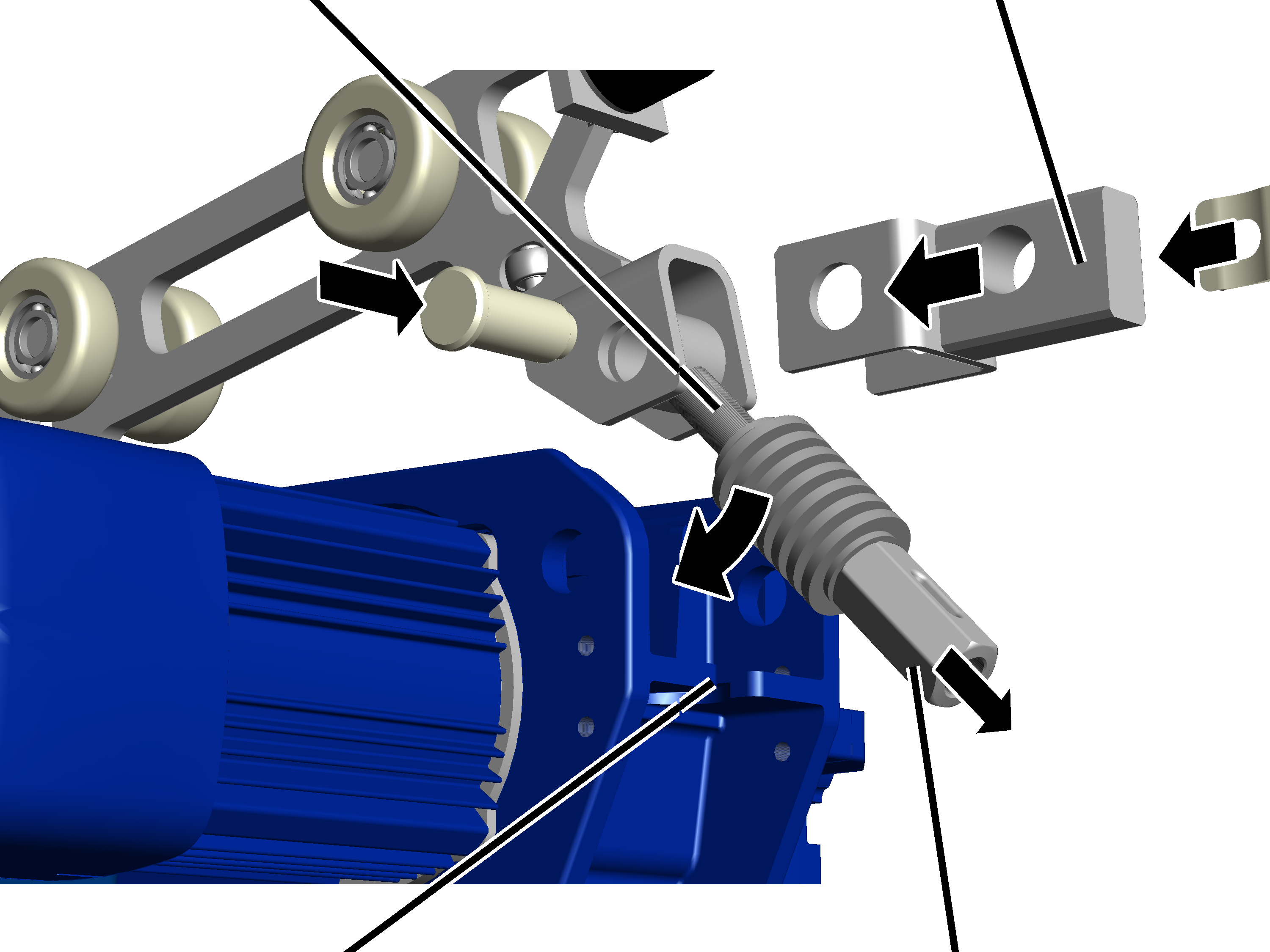
Eyebolt |
Coupling
(only with anti-collision device as preceding trolley) |
|
|
|
Recess
on HBF drive |
Coupling |
On the other side on the HBF drive, insert the eyebolt inside the
fork part.
Only with anti-collision device as preceding trolley or with coupling
bar: if, on the HBF drive side, an anti-collision device as preceding trolley or
an anti-collision device with coupling bar is to be installed, push a coupling
over the fork part.
Push the bolt through the fork part and eyebolt (and coupling if
appropriate).
Secure bolt with SL safety clip.
Unscrew the coupling from the eyebolt
until it is only a few turns from the end.
● This allows
the eyebolt to be suspended without counter-pressure from the plate springs.
Hook the eyebolt in the recess on the HBF
drive. The plate spring pack then goes under the recess on the HBF drive.
Inserting and
fastening the HBF drive
|
Crane/trolley travel mechanism |
HBF
trolley |
|
|
|
|
Coupling
bar |
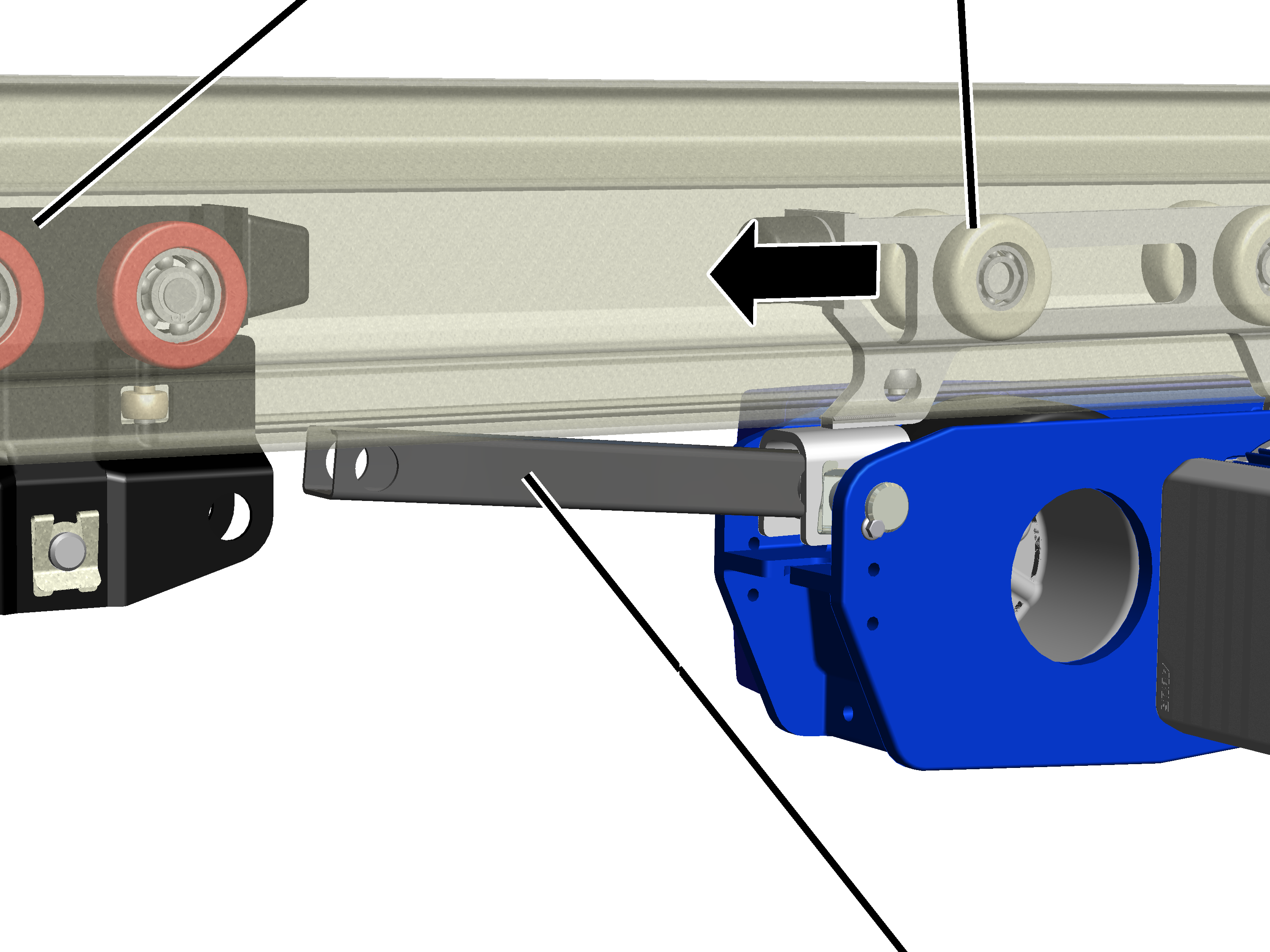
Turn the HBF drive so that the coupling bar points toward the trolley
on which the HBF drive is to be fixed.
Push the HBF drive with HBF trolley into the HB profile rail.
|
Bolt |
|
|
|
|
Spacer
bracket |
Coupling
bar |
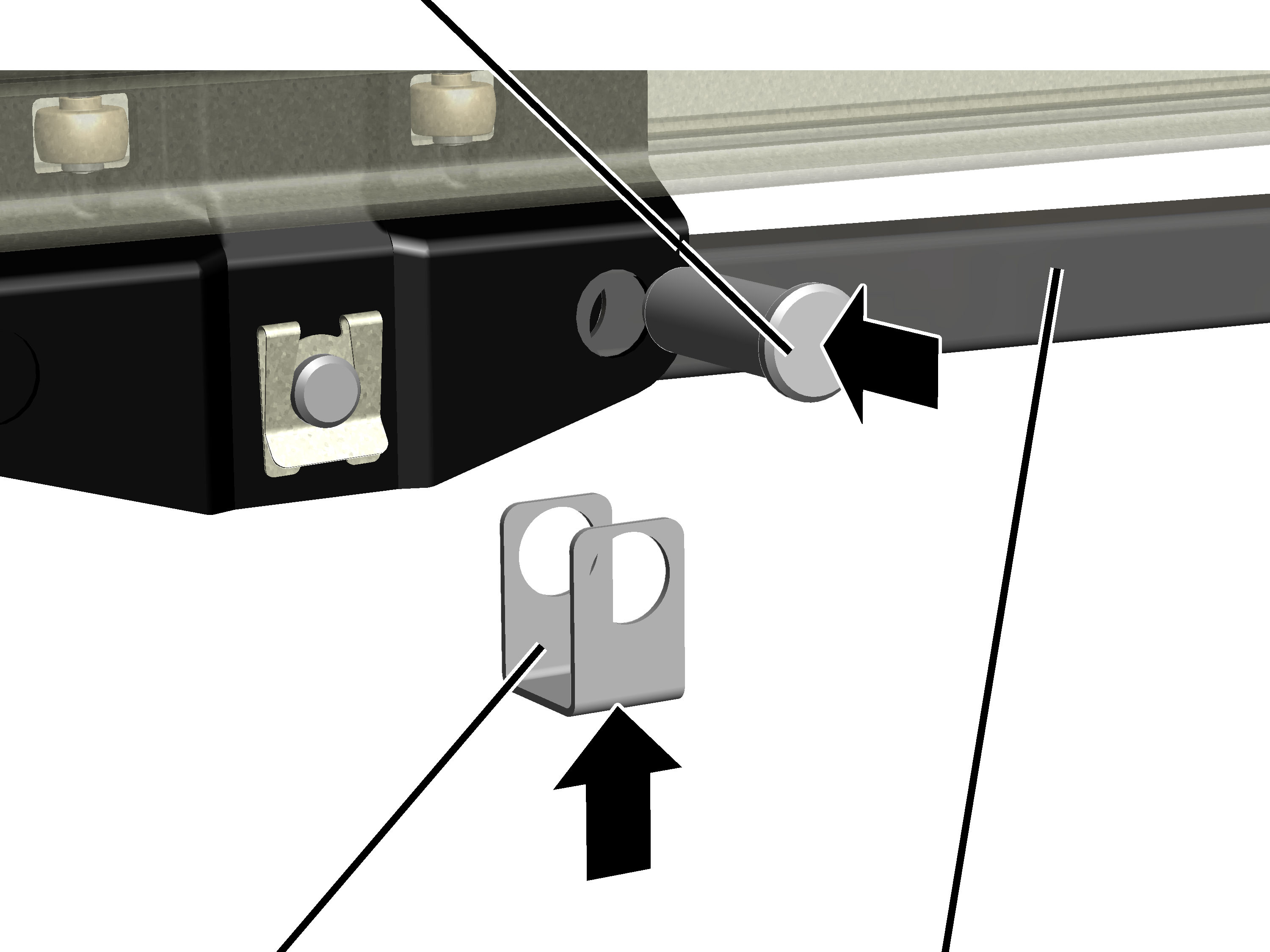
Push the HBF drive with the coupling bar up to the trolley.
The coupling bar is fixed in the hole facing the HBF drive.
Insert a spacer bracket between trolley
and coupling rod.
Insert bolt through trolley and coupling bar.
Secure bolt with SL safety clip.
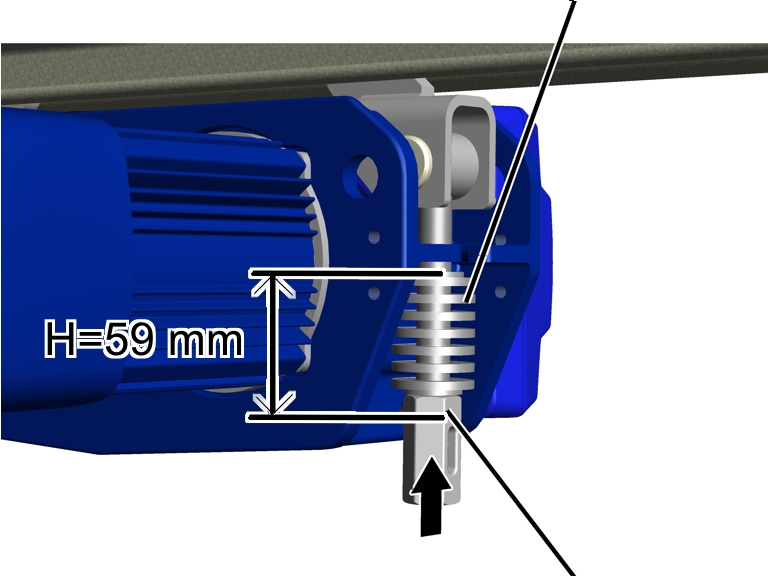
The plate springs serve in setting the pressure with which
the friction wheel presses the HBF drive against the HB profile rail.
|
|
|
Plate
springs |
|
|
|
|
|
|
Coupling |
Turn the coupling until the plate springs (including the upper and
lower discs) are H = 59 mm in length.
Secure coupling with spring cotter.
● The
friction wheel now presses hard enough against the HB profile rail.
Only for connection of the
HBF drive on the travel motor side
This section only applies if the HBF drive is to be connected
to the crane or trolley on the travel motor side.
Pre-assembling
the HBF drive
On every HBF drive:
|

|
The pictures illustrate the installation of a normal
coupling rod. Installation of a coupling rod for travelling around bends
does not differ significantly from this. |
|
Fork
part |
HBF
trolley |
|
|
|
Coupling
bar |
Bush |
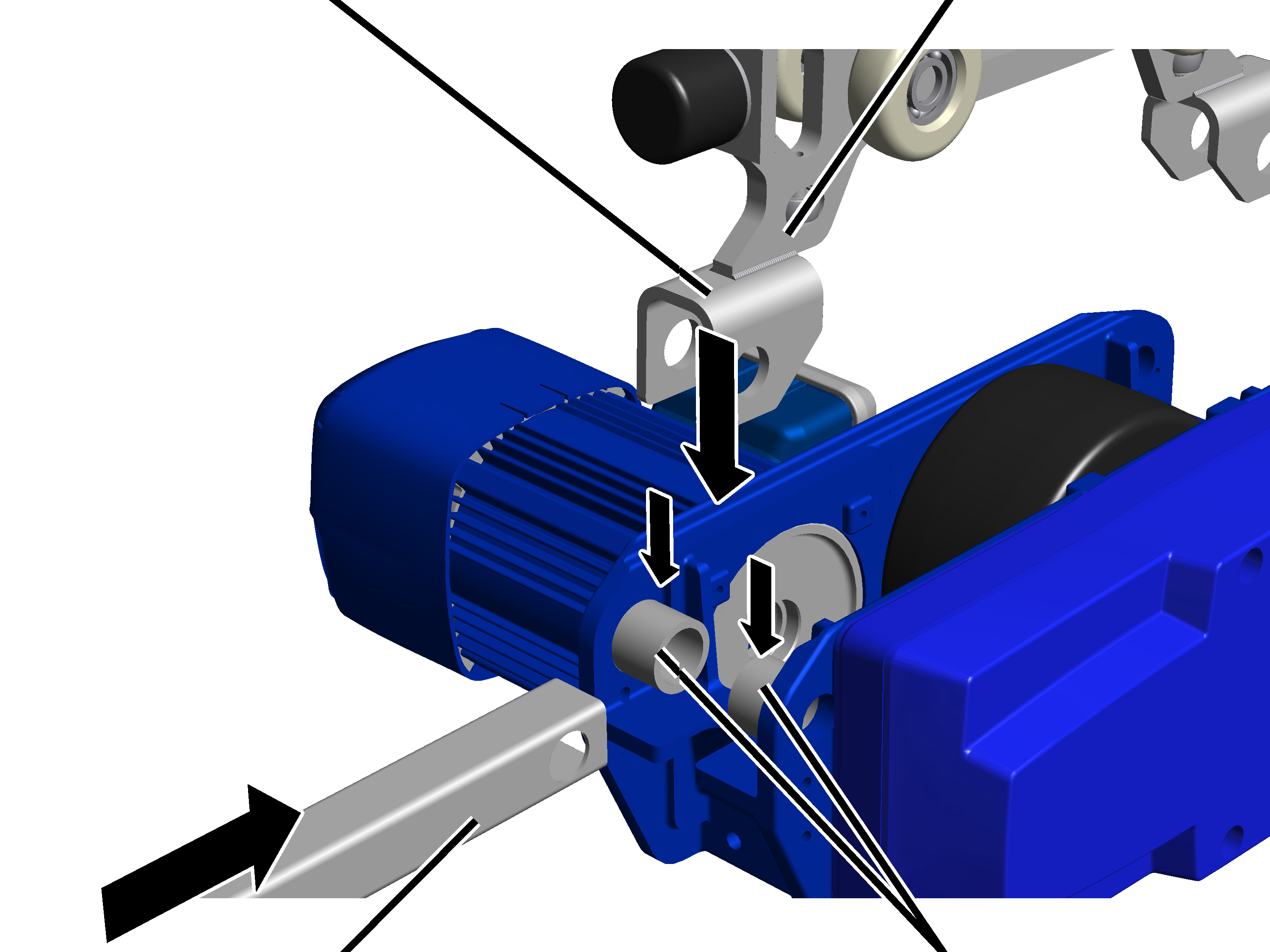
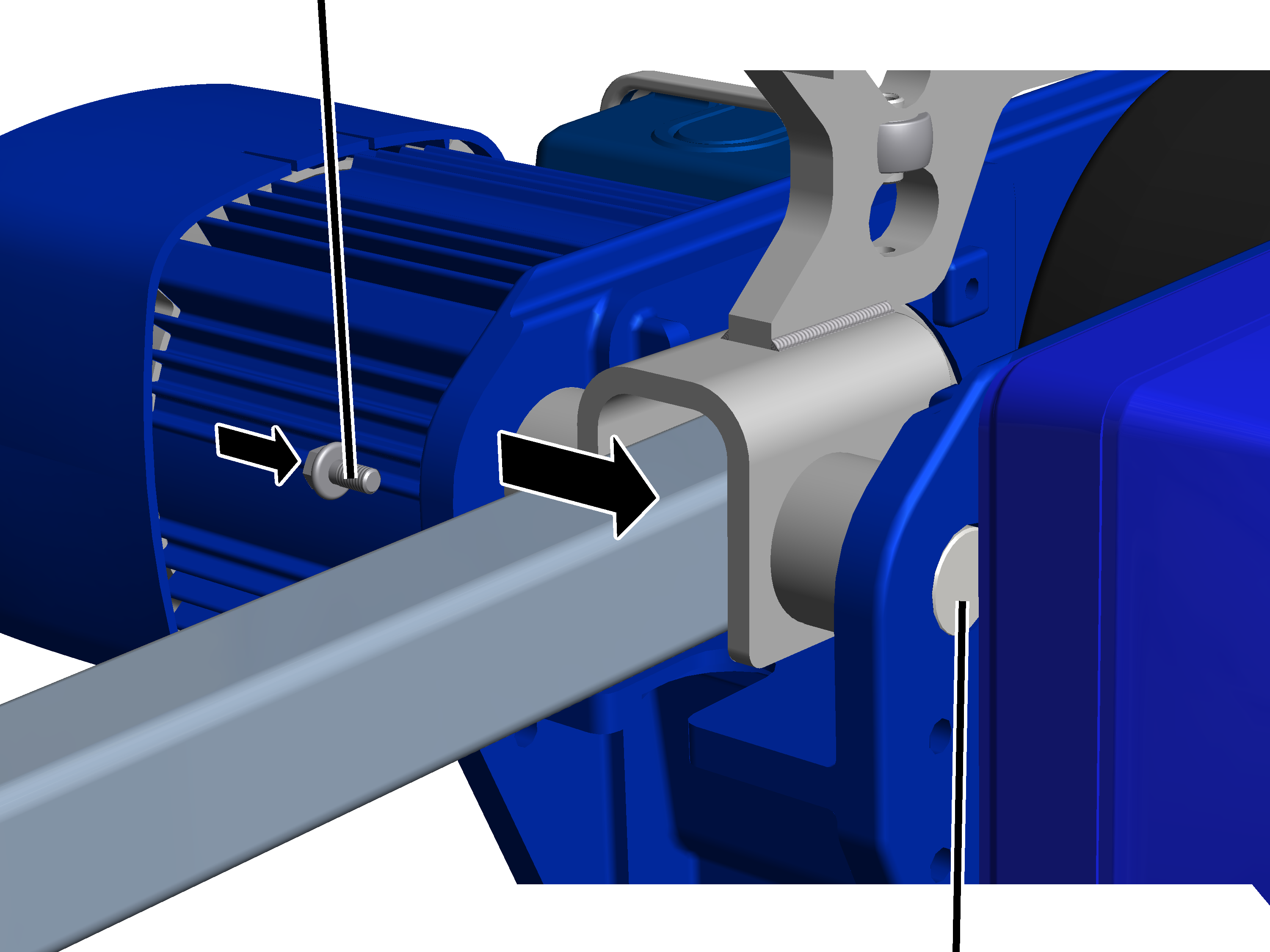
Move the bushes (2x) left and right and the fork part to the centre
between the HBF drive on the travel motor side.
Push the coupling bar between the fork part from the front.
|
Rib screws
M5x10 |
|
|
|
|
Bolt |
Push the bolt laterally through the HBF drive, the bushes, the fork
part and the coupling bar.
Screw the rib screw M5x10 (1x) in next to the bolt. 11 Nm.
● The bolt is
fixed in place on one side by the gear unit and on the other by the rib
screw.
|
Eyebolt |
Coupling
(only with anti-collision device as preceding trolley) |
|
|
|
|
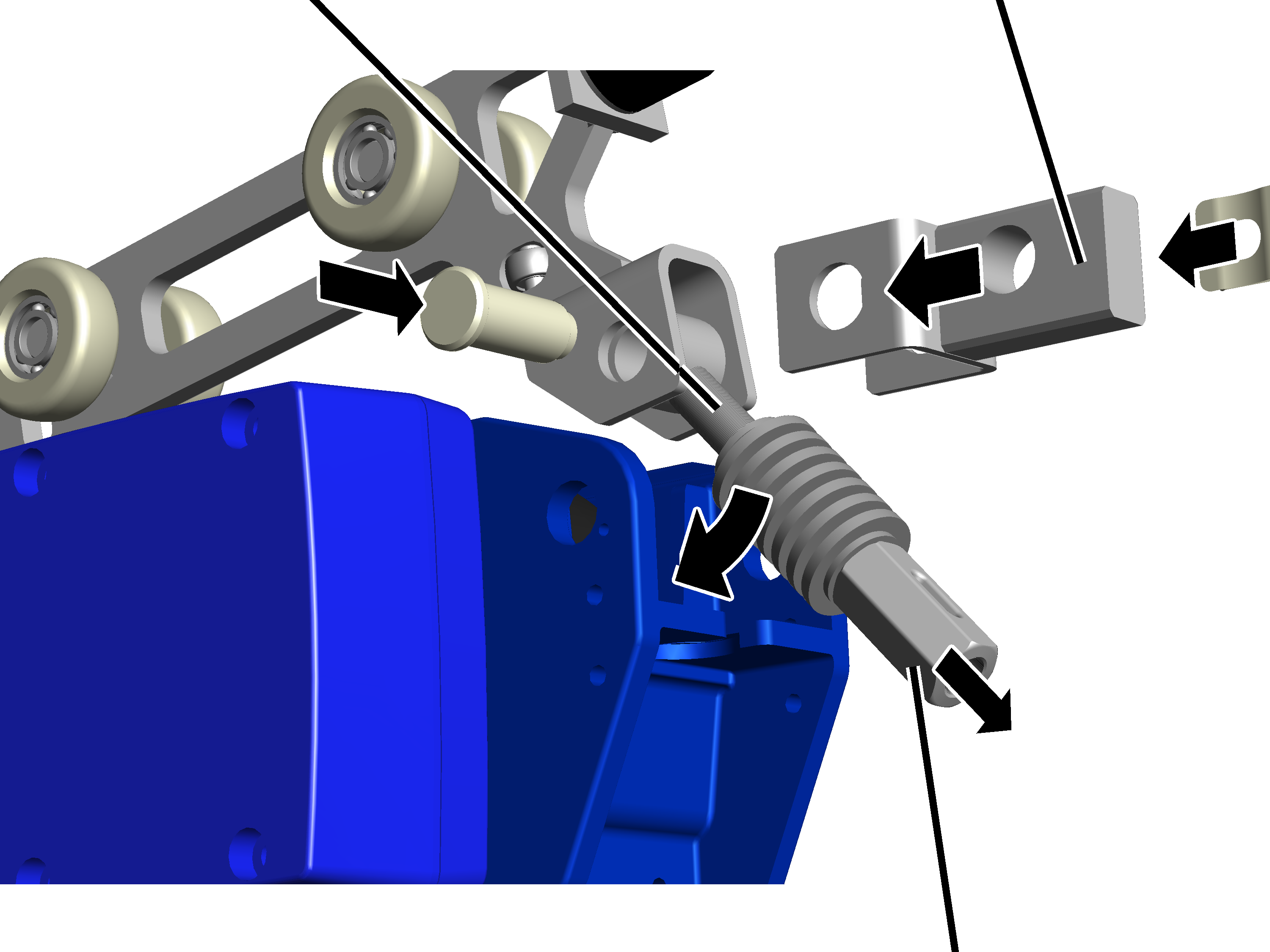
Coupling |
On the other side on the HBF drive, insert the eyebolt inside the
fork part.
Only with anti-collision device as preceding trolley or with coupling
bar: if, on the HBF drive side, an anti-collision device as preceding trolley or
an anti-collision device with coupling bar is to be installed, push a coupling
over the fork part.
Push the bolt through the fork part and eyebolt (and coupling if
appropriate).
Secure bolt with SL safety clip.
Unscrew the coupling from the eyebolt until it is only a few turns
from the end.
● This allows
the eyebolt to be suspended without counter-pressure from the plate springs.
Hook the eyebolt in the recess on the HBF
drive. The plate spring pack then goes under the recess on the HBF drive.
Inserting and
fastening the HBF drive
|
Crane/trolley travel mechanism |
HBF
trolley |
|
|
|
|
Coupling
bar |
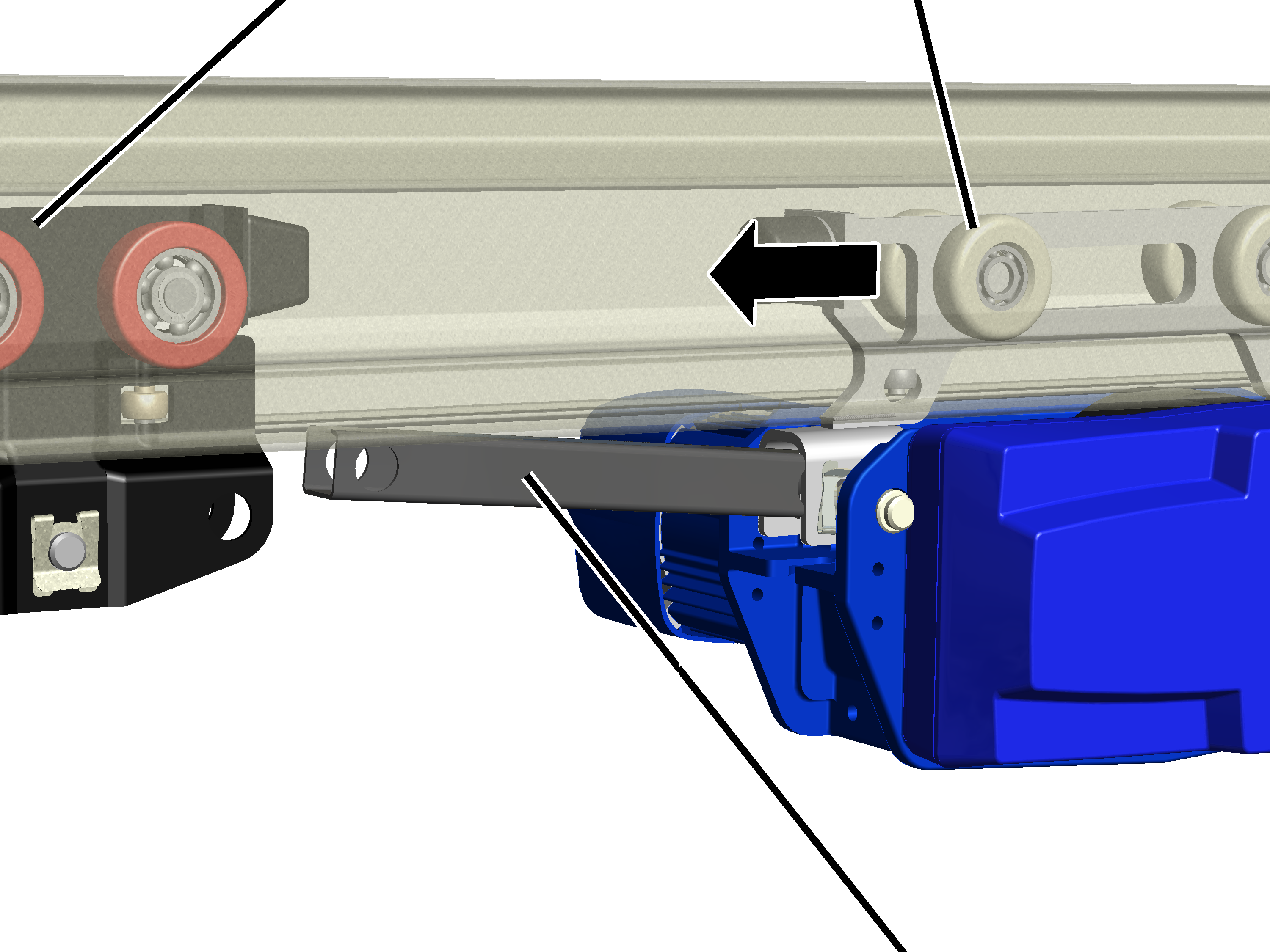
Turn the HBF drive so that the coupling bar points toward the trolley
on which the HBF drive is to be fixed.
Push the HBF drive with HBF trolley into the HB profile rail.
|
Bolt |
|
|
|
|
Spacer
bracket |
Coupling
bar |
Push the HBF drive with the coupling bar up to the trolley.
The coupling bar is fixed in the hole facing the HBF drive.
Insert a spacer bracket between trolley and coupling rod.
Insert bolt through trolley and coupling bar.
Secure bolt with SL safety clip.
Tensioning the
plate springs
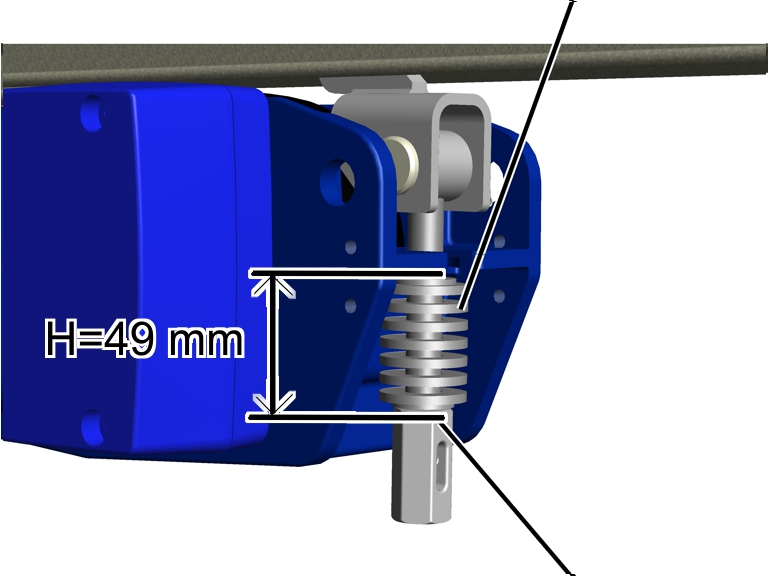
The plate springs serve in setting the pressure with which
the friction wheel presses the HBF drive against the HB profile rail.
|
|
Plate
springs |
|
|
|
|
Coupling |
Turn the coupling until the plate springs (including the upper and
lower discs) are H = 49 mm in length.
Secure coupling with spring cotter.
● The
friction wheel now presses hard enough against the HB profile rail.
Only for HBF drive as crane
travel drive
Checking the
inclination
Once the crane can run with maximum load capacity:
Suspend a load on the load hook which corresponds to the maximum load
capacity of the crane.
Run the crane a few metres.
Measure the inclination of the crane (difference in position from one
drive compared to the other drive).
If the inclination is greater than 2 degrees:
Release or tighten the plate springs of the HBF drive.
Measure the inclination again and correct it, if necessary.
An inclination of up to 2 degrees is uncritical and occurs
due to tolerances in the HBF drives and the friction wheels.