The figures show the installation of an HB profile rail of size HB150S. The installation of larger or smaller HB profile rails does not differ significantly from this.
Depending on the length of the individual profile rail sections, the number of suspensions, the on-site building conditions and the length of the crane track, several profile rail sections should be connected with each other on the floor if possible.
If this is not possible, the profile rail sections must first be fixed individually or as sections on the suspension and then afterward fully joined with each other. When doing this, it must be ensured that there is adequate space underneath the suspensions, especially in the case of short suspensions.
|
|
The figures show the installation of an HB profile rail of size HB150S. The installation of larger or smaller HB profile rails does not differ significantly from this. |
 The profile rail sections must be laid out on the building floor the
way they are to be later installed.
The profile rail sections must be laid out on the building floor the
way they are to be later installed.
|
|
The position of the profile rail sections is specified in the planning documents. |
The specified dimensions, positions and clearances must be followed exactly.
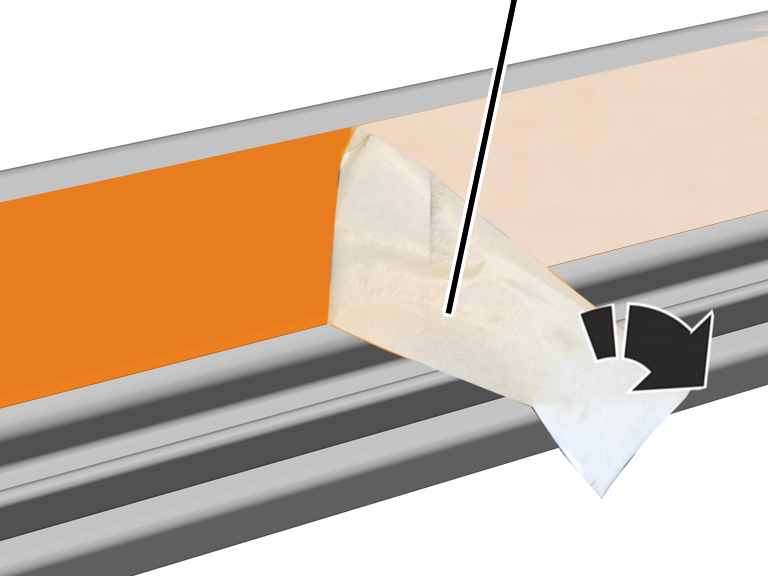
The profile rail sections are laminated at the sides. The protective film is removed before further assembly.
|
|
Protective film |
|
| |
Pull off the protective film at a sharp angle from the side
lamination.
At each profile joint:
|
| |
|
Profile rail sections |
|
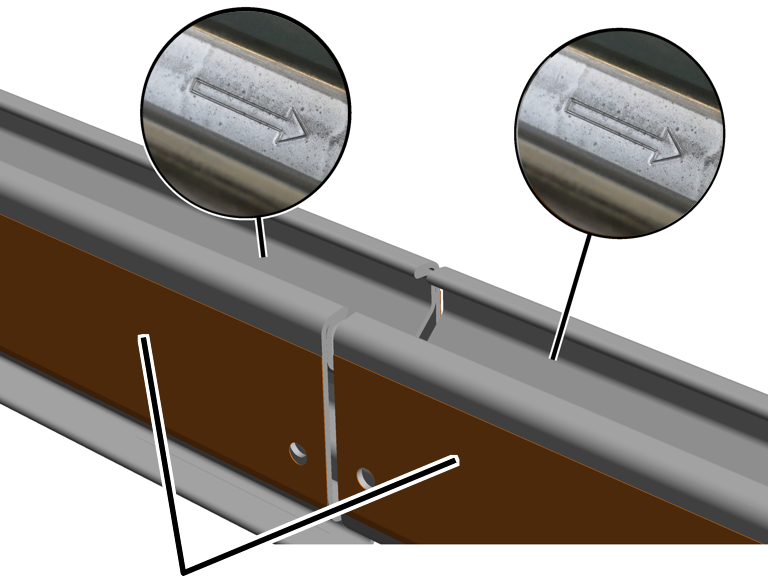
 Turn the profile rail sections so that the arrows on all of them
point in the same direction.
Turn the profile rail sections so that the arrows on all of them
point in the same direction.
Place the profile rail sections flush to one another.
|
|
Raise the profile rail sections just in front of the profile joint by
about 5 cm (e.g. on the floor with a wooden beam or, with suspended
assembly, by slightly lowering the unassembled profile rail section).
● In this way, the profile rail sections join at a slight angle to one another. This ensures that despite the camber (the profile rail sections are arched upward slightly) the distance at the bottom between the profile rails is as small as possible.
|
| |
|
Profile rail section |
Spacer part |
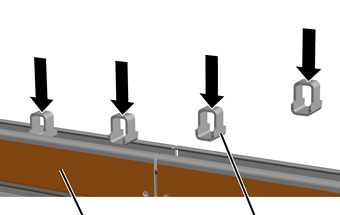
Insert spacer parts from above in the left and right profile rail
sections and, if necessary, knock them slightly into place.
● The spacer parts are clamped in the profile head but can still slide back and forth.
There are two different clamping plates available (with brackets or joining rib).
|
|
Which profile joint is to be mounted on which clamping plate is specified in the planning documents. |
─ If the distance from a suspension to the profile joint is maximally 600 mm, use the clamping plate with brackets (length 700 mm):
|
|
|
|
| |
|
Clamping plate with brackets (length 700 mm) |
Distance maximally 600 mm |
─ If the distance from a suspension to the profile joint is greater than 600 mm, use the clamping plate with joining rib (length 1100 mm):
|
|
|
|
| |
|
Clamping plate with rib (length 1100 mm) |
Distance greater than 600 mm |
|
|
The figures show the installation of a clamping plate with brackets. The installation of a clamping plate with joining ribs does not essentially differ. |
|
| |
|
|
Clamping plate |
Tilt the clamping plate slightly and insert it below in the profile
rail section.
When doing this, insert the bottom of the clamping plate behind the edge on the profile rail section.
Position the clamping plate so that it is exactly centred between the
two profile rail sections.
Press the top of the clamping plate against the profile rail
section.
An assembly aid can now be bolted on at the top. It will make it easier to screw the clamping plates together.
On the clamping plate:
|
| |
|
Assembly aid |
Rib nut M12 |
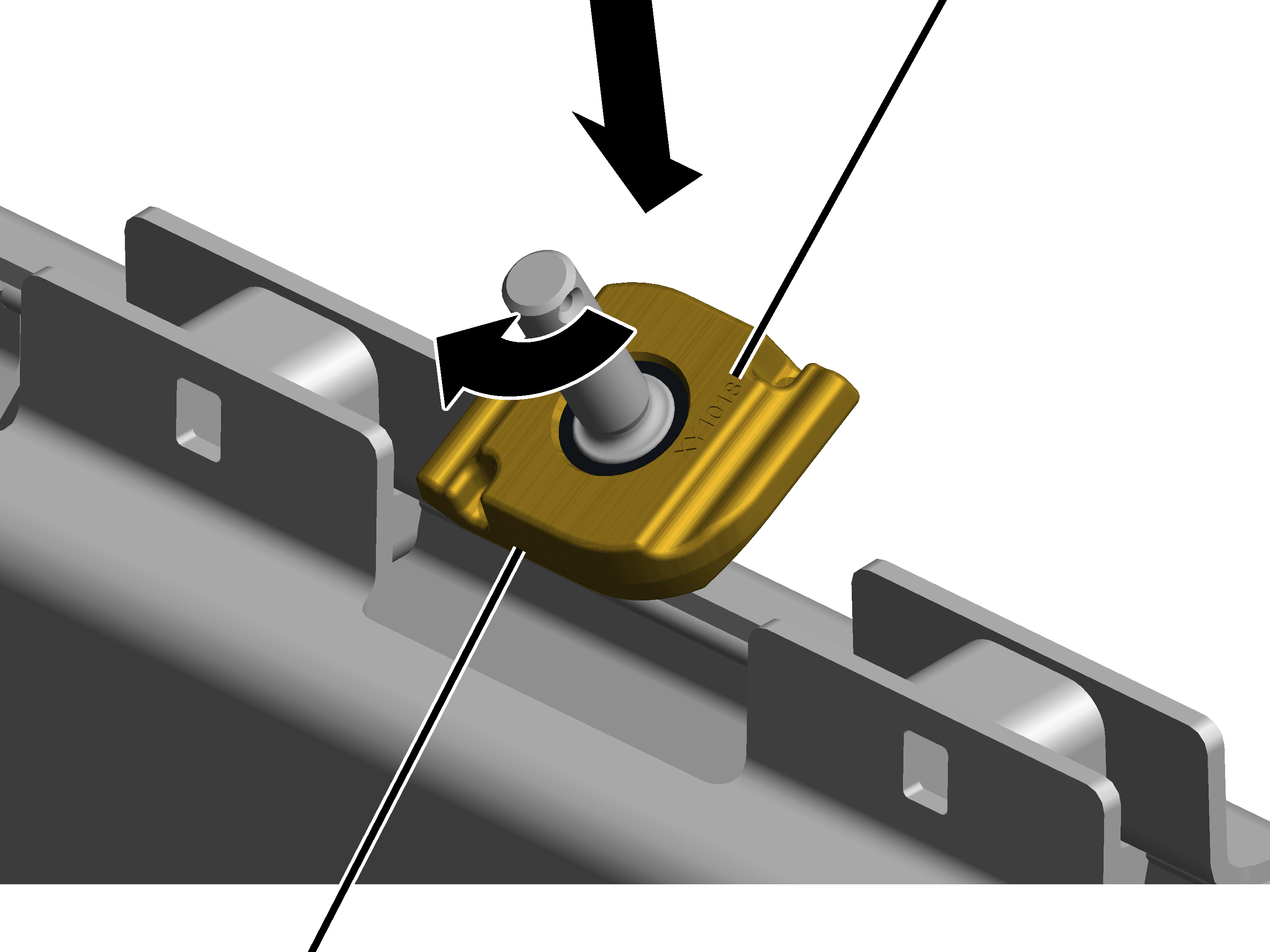
Bolt the assembly aid on the outer lug with an M12 rib nut.
● The clamping plate is held by the assembly aid and can no longer fall down.
Insert the second clamping plate as described above on the opposite
side and secure it with the assembly aid.
This work step only applies if a suspension will be installed in the area of a profile joint.
After both clamping plates have been inserted and secured with the assembly aids:
|
|
The figures show the installation of an M16 profile connection. The installation of an M20 profile connection does not essentially differ. |
|
|
|
Bearing shell | |
|
|
| ||
|
|
Profile link |
| |
Tilt the profile link and insert it from above at the required point
in the profile head.
Once the clamping plate is installed, the profile link can no longer be shifted to a different lug.
Turn the profile link 90 degrees.
Only with a craneway suspension in the area of a clamping plate: the clamping plates do not need to be inserted exactly centred on the profile joint. The clamping plates can be shifted up to 100 mm to the left or right so that the profile link for the suspension is always at the preferred point.
Note:
For a profile joint without a suspension, the clamping plates must be installed exactly centred!
|
|
The assembly screw (which is longer than the actual screws) is used to pull the clamping plates to the HB profile rail so that the actual screws can be inserted.
Check the spacing of the profile rail sections again.
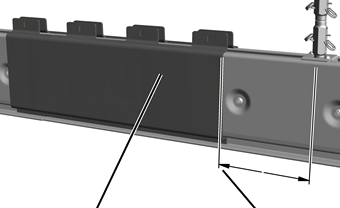
The profile rail sections can be directly flush to one another. The must not be more than 2 mm apart.
|
Assembly aids |
|
|
| |
|
|
Assembly screw M12x95 |
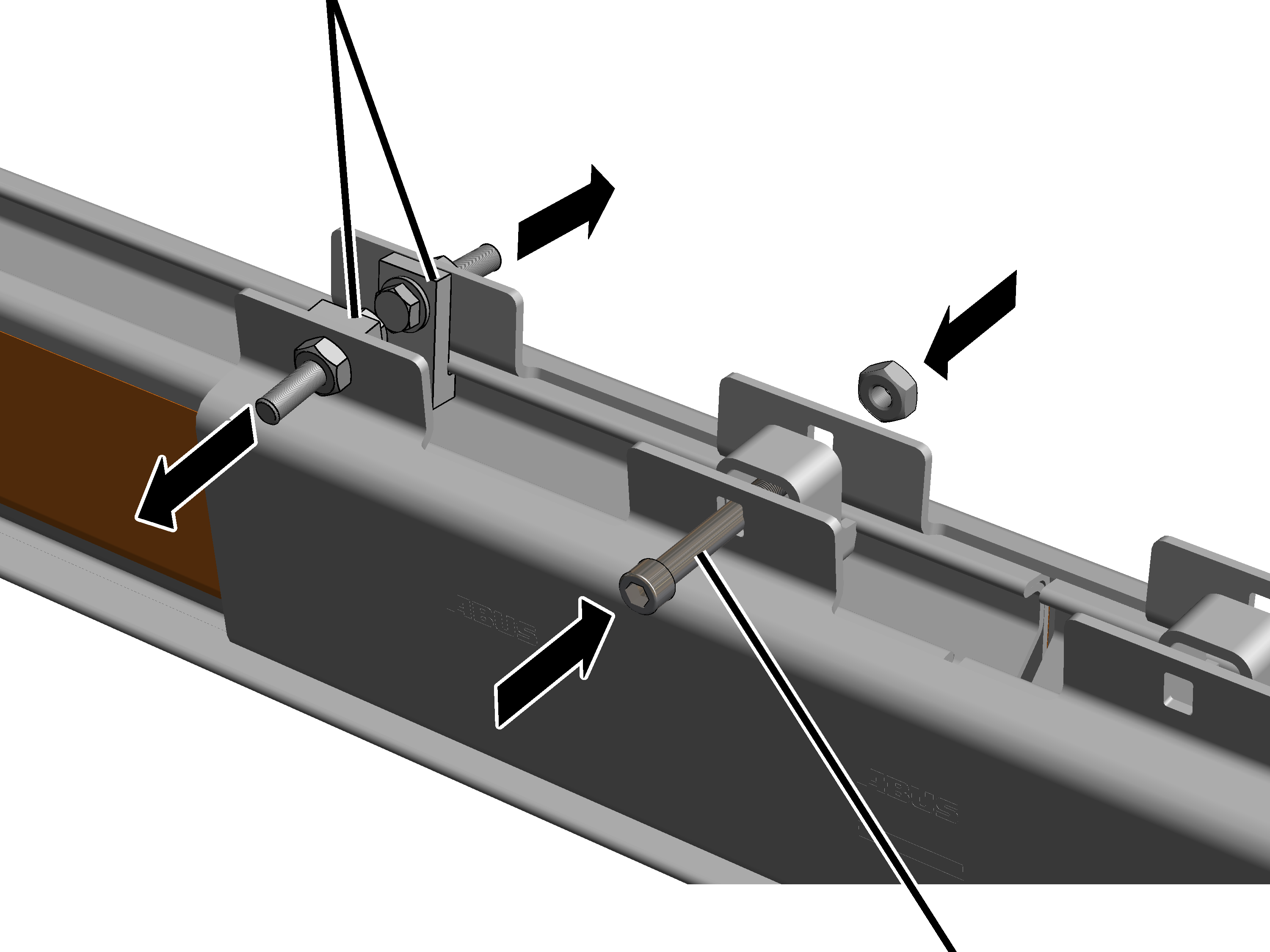
Insert the M12x95 assembly screw through two opposite-lying brackets
of the clamping plate.
Screw a hexagonal nut onto the assembly screw.
Continue screwing the assembly screw and hexagonal nut together to
pull the clamping plates to the HB profile rail from both sides.
Once the assembly screw is screwed on: remove the assembly aids
(2x).
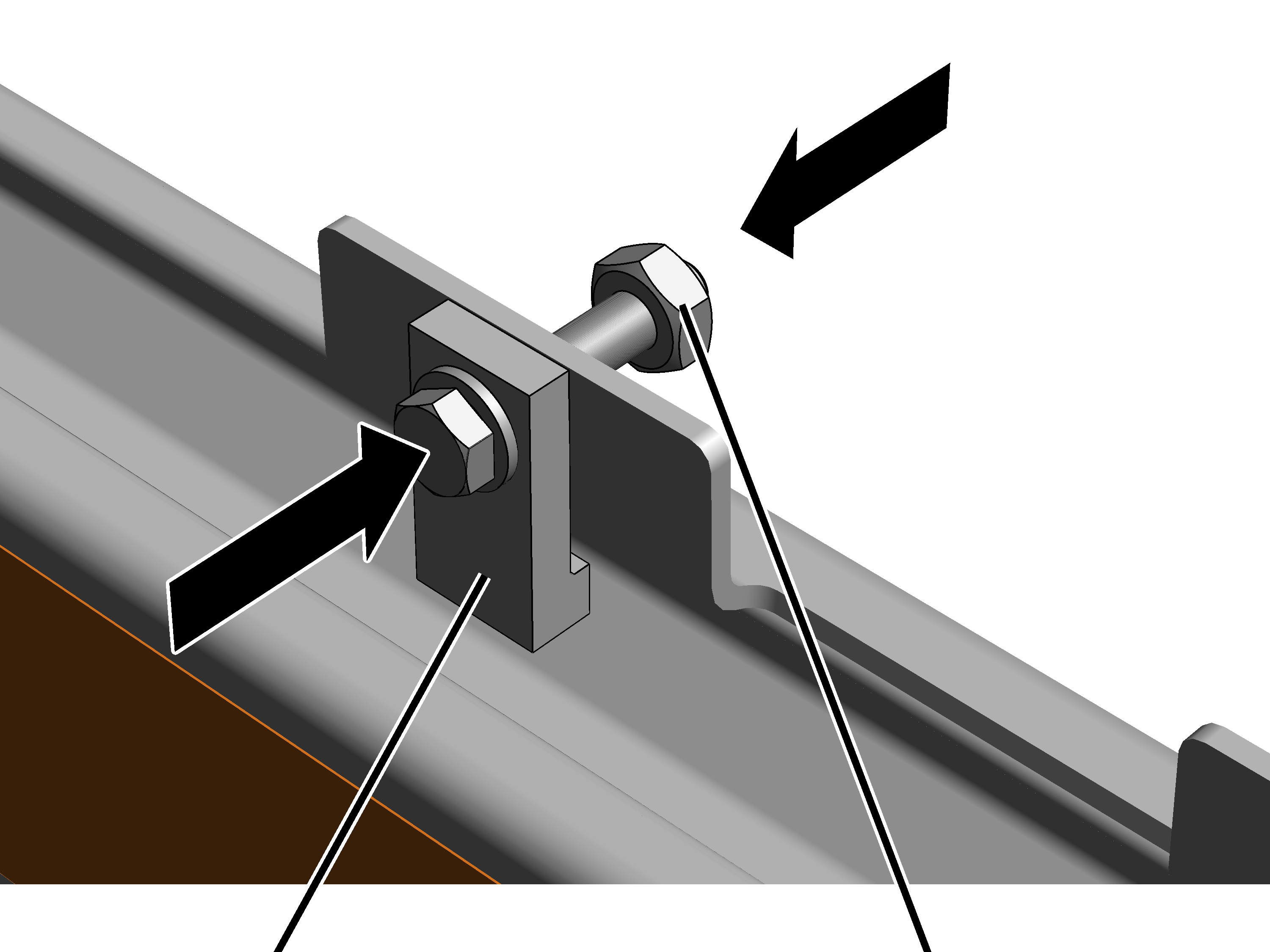
On all spacer parts:
|
Assembly screw |
Hexagonal nut |
|
| |
|
Cup square bolt |
Spring washer |
Push the cup square bolts through the clamping plates and the spacer
parts.
|
Size |
Cup square bolt |
Rating |
|
HB110 |
M12x40 |
12.9 |
|
HB150 |
M12x60 |
12.9 |
|
HB190 |
M12x60 |
12.9 |
|
HB240 |
M12x60 |
12.9 |
● The square end of the cup square bolt locks in the clamping plate and therefore cannot turn.
Insert spring washer.
Loosely screw the M12 hexagonal nut onto the cup square bolt.
Screw the hexagonal nuts on. 120 Nm.
The U-shaped plates included do not have to be installed yet. They are only required if the travel gap is too wide.
After the assembly of the clamping plates, check whether the profile rail sections have bent apart.
|
|
Travel gap | |
|
| ||
|
|
Distance | |
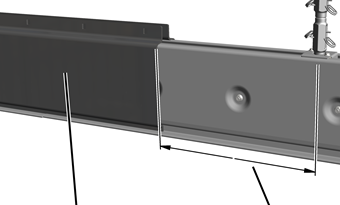
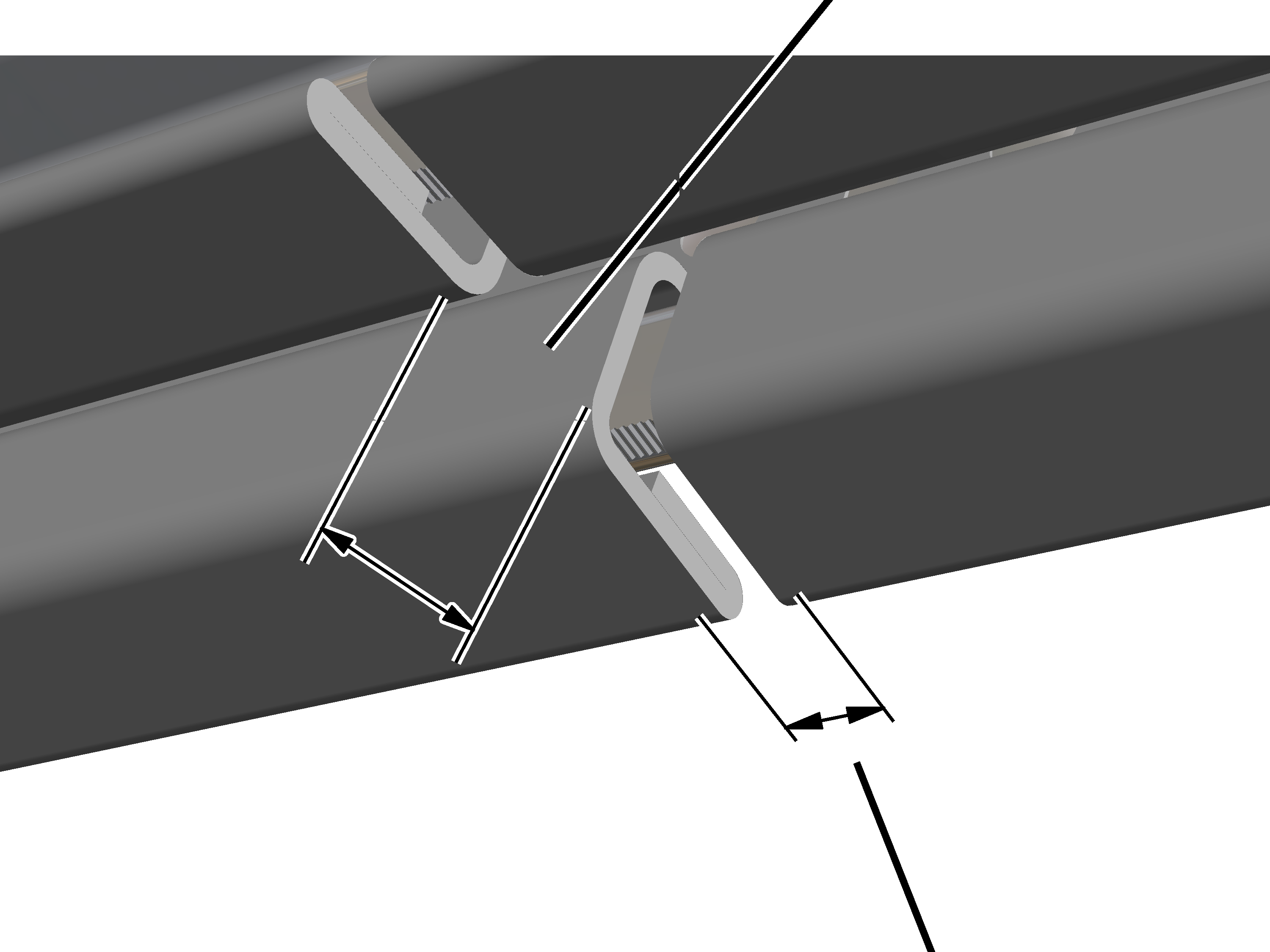
Check the travel gap in the area of
the profile joint:
─ The travel gap is permitted to be maximally 25 mm wide.
─ The travel gap must be at least 19 mm wide.
If the travel gap is too wide or too narrow: press the profile rail
section together with a screw clamp or use a suitable lever to press it
apart.
Check the spacing of the profile rail sections.
The profile rail sections can be directly flush to one another. The must not be more than 2 mm apart.
If the travel gap is still wider than 25 mm:
The enclosed U-shaped plates can be inserted in addition to the spacer parts to reduce the travel gap.
|
|
Spacer part |
|
| |
|
U-shaped plates |
Clamping plate |
Slightly loosen all hexagonal nuts on the cup square bolts.
● The clamping plates (2x) move apart at the top at the spacer parts.
Insert a U-shaped plate from above on the left and right next to all
spacer parts.
The plates always have to be inserted on the left and right and always on all four spacer parts.
The plates must be inserted until they are flush with the top edge of the spacer parts.
Screw the hexagonal nuts on. 120 Nm.
● The plates keep the clamping plates on the profile head somewhat further apart. Thus the profile rail sections at the travel gap will not bend as far apart.
Check the travel gap again.